 Free Shipping
  Buy Now, Pay Later
  Eligible

Does Red Light Therapy Help with Myositis? A Comprehensive Evidence Review
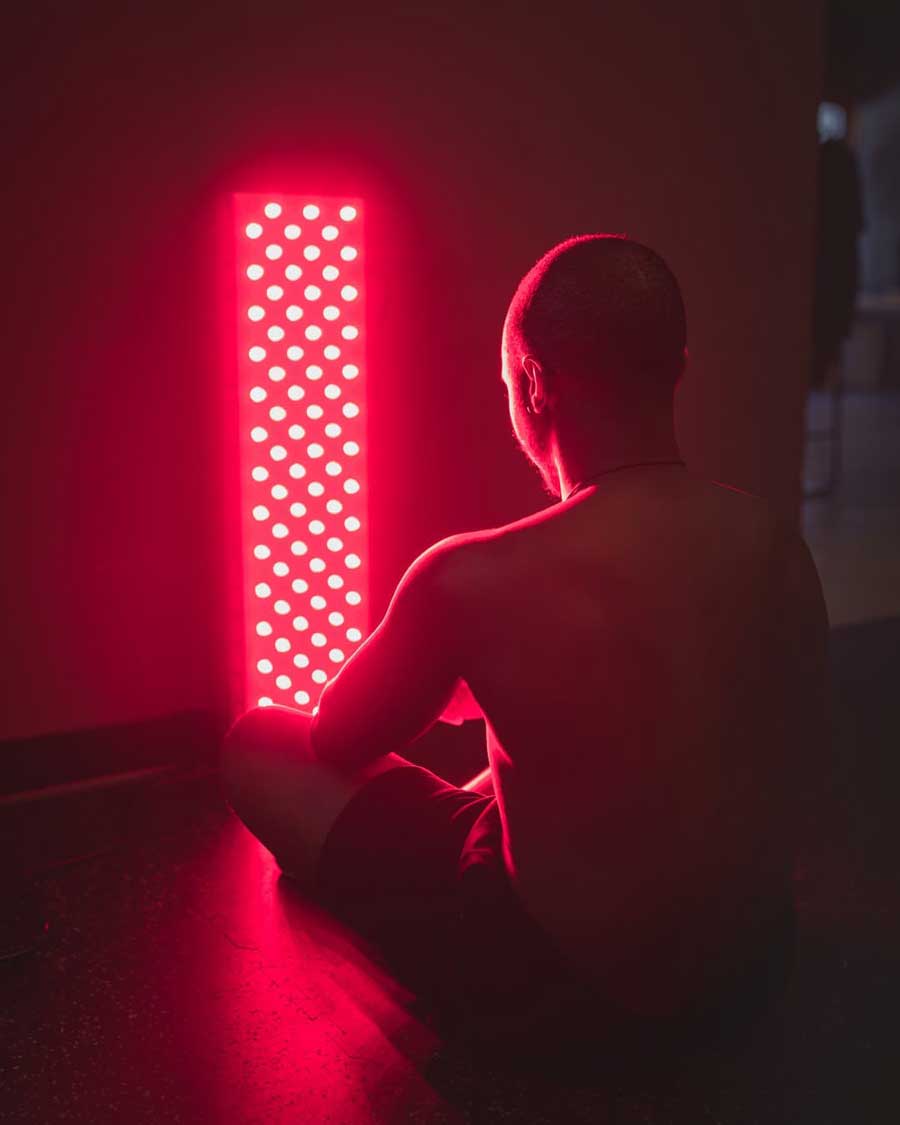
Bottom line: Red light therapy (photobiomodulation) shows biological promise for reducing inflammation and supporting tissue repair, but direct clinical evidence for myositis—particularly dermatomyositis and polymyositis—remains limited. No major rheumatology or neurology guidelines currently recommend red light therapy as a primary treatment for any form of myositis. It may serve as a complementary modality, but it should not replace disease-modifying therapy.
What Is Myositis?
Myositis refers to a group of inflammatory myopathies characterized by muscle weakness, inflammation, and sometimes skin involvement. The three primary subtypes are:
| Subtype | Key Features | Typical Treatment |
|---|---|---|
| Dermatomyositis (DM) | Proximal muscle weakness + characteristic skin rash (heliotrope, Gottron papules); often associated with malignancy in adults | Corticosteroids, methotrexate, IVIG, rituximab |
| Polymyositis (PM) | Proximal muscle weakness without skin involvement; T-cell mediated | Corticosteroids, azathioprine, methotrexate |
| Inclusion Body Myositis (IBM) | Distal and proximal weakness; asymmetric; poor response to immunosuppression | No FDA-approved therapy; IVIG may help dysphagia |
The hallmark pathology involves immune-mediated muscle damage, with elevated inflammatory cytokines and, in IBM, degenerative features including protein aggregation .
What Is Red Light Therapy (Photobiomodulation)?
Red light therapy, clinically termed photobiomodulation (PBM) or low-level laser therapy (LLLT), uses non-ionizing red (630–660 nm) and near-infrared (810–850 nm) wavelengths to influence cellular activity without generating significant heat .
Mechanism of Action
These mechanisms theoretically support its use in inflammatory muscle conditions, but biological plausibility does not equal clinical efficacy.
Current Evidence: What Do Studies Actually Show?
Preclinical Evidence
This animal study suggests PBM can modulate acute muscle inflammation, but results from induced myositis in rats do not directly translate to human autoimmune myositis.
Clinical Evidence in Myositis
There are no published randomized controlled trials evaluating red light therapy specifically for dermatomyositis, polymyositis, or inclusion body myositis.
| Evidence Type | Status for Myositis |
|---|---|
| RCTs | None published |
| Case reports | None identified for DM/PM/IBM |
| Case series | None identified |
| Expert consensus | No professional society guidelines recommend PBM for myositis |
A 2019 review on laser light therapy for inflammatory and autoimmune diseases concluded that while LLLT is “promising” for skin and joint conditions, evidence is limited by “variability in methods of laser application” and “lack of evidence for laser type, dose-ranging studies, and wavelength selection” .
Related Evidence: Dermatomyositis Skin Manifestations
One case report describes successful treatment of refractory facial rash associated with dermatomyositis using narrowband intense pulsed light (IPL)—a related but distinct modality from red light therapy . This addresses cutaneous symptoms only, not muscle weakness or systemic inflammation.
Wavelength and Tissue Penetration: A Critical Limitation
A fundamental challenge for treating myositis with red light therapy is penetration depth:
| Wavelength | Penetration Depth | Target Tissue |
|---|---|---|
| 660 nm (visible red) | ~2–3 mm | Skin, superficial dermis |
| 810–850 nm (near-infrared) | ~5–10 mm or more | Joint capsules, superficial muscle |
| Deep muscle tissue | Beyond typical PBM reach | Requires invasive delivery |
Clinical implication: The quadriceps and gluteal muscles commonly affected in myositis lie deeper than what non-invasive red light devices can reliably reach. As one Mayo Clinic Connect discussion noted, rheumatologists and dermatologists have advised patients that “red light can’t penetrate deep enough through muscle tissue” .
This limitation does not rule out potential benefits from systemic or indirect effects, but it substantially constrains what surface-applied PBM can achieve for deep muscle inflammation.
Comparison: Red Light Therapy vs. Established Myositis Treatments
| Treatment | Evidence Level | Route | Primary Target | Key Limitations |
|---|---|---|---|---|
| Corticosteroids | Established (RCT) | Oral/IV | Systemic inflammation | Long-term toxicity, osteoporosis, infection risk |
| Methotrexate | Established (RCT) | Oral/SC | Immune modulation | Hepatotoxicity, photosensitivity (UV) |
| IVIG | Established (case series/RCT for IBM dysphagia) | IV | Immune modulation | Cost, infusion burden, variable response |
| Rituximab | Moderate evidence | IV | B-cell depletion | Infection risk, cost |
| Red Light Therapy | Preclinical only for myositis | Topical | Local inflammation, mitochondrial function | No human myositis trials; penetration depth limits |
Important: Red light therapy should never replace established, evidence-based treatment for myositis without specialist guidance.
Safety Considerations for Myositis Patients
What Would a Doctor Say?
Based on current evidence, a rheumatologist or neurologist would likely say:
- “There is no strong evidence that red light therapy treats myositis itself.” The absence of human clinical trials means efficacy for muscle inflammation, weakness, or systemic disease activity is unproven.
- “It might help with localized symptoms.” If you have superficial muscle pain or skin involvement, PBM could theoretically provide symptomatic relief, but this is extrapolated from other conditions, not proven in myositis.
- “Don’t stop your prescribed treatment.” Red light therapy is not a substitute for immunosuppression, IVIG, or other disease-modifying therapies.
- “If you want to try it, do so as an adjunct—not a replacement.” Discuss with your specialist first, especially if you have photosensitivity or are on medications with unknown photochemical interactions.
Practical Guidance If Considering Red Light Therapy
If you and your specialist decide to trial PBM as a complementary approach:
| Parameter | Conservative Recommendation |
|---|---|
| Wavelength | 660 nm (surface) and/or 810–850 nm (deeper tissue) |
| Session duration | Start 3–5 minutes per site for first 2 weeks |
| Frequency | Every other day initially |
| Device quality | Look for published irradiance figures (mW/cm² at stated distance), verified wavelength peaks, FDA registration/CE marking |
| Tracking | Log session length, site, and any changes in pain, stiffness, or function over 4–12 weeks |
| Review | Reassess with your specialist after 4–6 weeks |
Key Takeaways
- Red light therapy has plausible anti-inflammatory mechanisms relevant to myositis, supported by preclinical research .
- However, no human clinical trials have evaluated PBM for dermatomyositis, polymyositis, or IBM. Evidence for these specific conditions is absent.
- Penetration depth is a major limitation for targeting deep muscle inflammation non-invasively.
- PBM may have a role as a complementary modality for superficial symptoms or skin manifestations, but not as a replacement for established treatment.
- Always discuss with your rheumatologist or neurologist before starting red light therapy, especially given potential photosensitivity and medication interactions.
References
- Carvalho AFM, et al. The low-level laser on acute myositis in rats. Acta Cir Bras. 2015;30(12):806-11.
- Zheng Y, et al. Narrowband Intense Pulsed Light Treatment for Refractory Facial Rash Associated with Dermatomyositis. Clin Cosmet Investig Dermatol. 2023;16:2481-2484.
- Mayo Clinic Connect. Red Light for Myositis discussion.
- Wickenheisser VA, et al. Laser Light Therapy in Inflammatory, Musculoskeletal, and Autoimmune Disease. Curr Allergy Asthma Rep. 2019;19(8):37.
- Reddot LED. Red Light Therapy and Autoimmune Conditions: What the Science Actually Shows.
- News-Medical. Red Light Therapy: How Light Improves Cellular Energy and Repair.
- Dézsi L, et al. Inclusion body myositis—a rarely recognized disorder. Ideggyogy Sz. 2013;66(3-4):89-101.