 Free Shipping
  Buy Now, Pay Later
  Eligible

Red Light Therapy and the Vagus Nerve: A Breakthrough in Neuromodulation
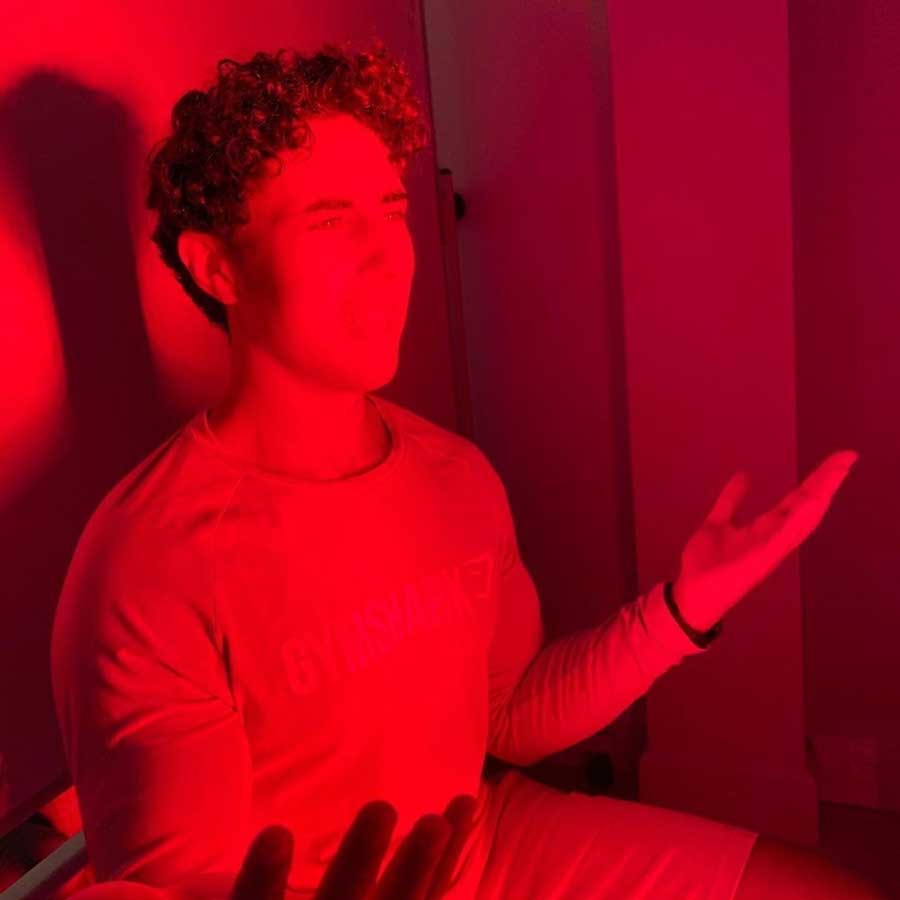
In the ever-evolving landscape of biohacking and therapeutic medicine, two powerful forces are converging: Photobiomodulation (PBM)—often called red light therapy—and Vagus Nerve Stimulation (VNS).
Traditionally, stimulating the vagus nerve required invasive surgical implants. However, cutting-edge research from institutions like Vanderbilt University and clinical trials registered with the NIH suggests that light can non-invasively modulate this critical nerve .
This article explores the science, the clinical evidence, and the future of using red and near-infrared (NIR) light to treat inflammation, stress, and chronic disease by harnessing the power of the vagus nerve.
What is the Vagus Nerve and Why Does It Matter?
The vagus nerve is the longest and most complex of the cranial nerves. Often called the “body’s superhighway,” it runs from the brainstem down into the abdomen. It is the primary component of the parasympathetic nervous system (the “rest and digest” system), acting as a brake pad for the heart and a regulator for the immune system.
- Heart Rate Variability (HRV): A healthy vagus nerve results in high HRV, indicating resilience to stress.
- Inflammation Control: The vagus nerve operates the “cholinergic anti-inflammatory pathway.” When activated, it releases acetylcholine to inhibit pro-inflammatory cytokines (like TNF-a) .
“The potential impact is revolutionary and disruptive,” says E. Duco Jansen, Ph.D. , Professor of Biomedical Engineering at Vanderbilt University, regarding the use of infrared light to target neural tissue .
The Mechanism: How Light Talks to Neurons
How can light on your skin affect a deep internal nerve? The process relies on two distinct mechanisms depending on the intensity and target: Direct Infrared Neuromodulation and Transcranial Photobiomodulation.
1. Direct Infrared Neuromodulation (Selective Blocking)
Unlike electrical stimulation which can affect all fibers randomly, researchers at the University of Pittsburgh have discovered that Infrared (IR) light (specifically ~1860 nm) can selectively target small-diameter axons (SDAs) .
- The Effect: These are the fibers responsible for pain and certain autonomic dysfunctions. IR radiation can reversibly block these signals without affecting the larger motor fibers.
- The Advantage: No electrical artifact and high spatial specificity.
2. Photobiomodulation and the Mitochondria
For non-invasive devices (like cervical or transcranial wands), red/NIR light (600-1100 nm) works by interacting with Cytochrome C Oxidase (CCO) in the mitochondria .
- This increases cellular energy (ATP).
- It releases nitric oxide (NO), vasodilating blood vessels.
- It modulates calcium ion channels, stabilizing neural membranes.
Clinical Applications and Research
Recent clinical data suggests that light-based vagus stimulation is moving from bench science to bedside application.
1. Inflammation Control (The Inflammatory Reflex)
In cases of sepsis or chronic inflammation, the body’s cytokine response can be deadly. A 2024 study presented to the Congress of Neurological Surgeons tested red-light optogenetics on mice.
- Finding: Selective activation of cholinergic vagal fibers using red light (635nm) significantly inhibited splenic TNF-alpha production in acute endotoxemia .
- Significance: This provides a pathway for using light to treat rheumatoid arthritis, Crohn’s disease, and sepsis without drugs.
2. Stress, Anxiety, and Heart Rate Variability
HRV is a direct marker of vagal tone. A systematic review published in Neuroscience & Biobehavioral Reviews noted that specific light exposures can modulate vagally-mediated HRV.
- Finding: Lower-illuminance warm-colored light (red) showed potential to increase vmHRV, indicating a calming effect on the nervous system .
A separate trial at Brigham and Women’s Hospital is actively investigating the use of transcutaneous cervical plus intranasal PBM (810nm) to see if it can buffer the autonomic nervous system against the Maastricht Acute Stress Test (MAST). The study measures changes in RMSSD (a key HRV metric for vagal tone) .
3. Addiction and Craving Management
A groundbreaking 2025 study registered by Yonsei University (South Korea) is exploring the combination of Transcranial PBM (tPBM) and Transcutaneous Auricular VNS (taVNS) for alcohol craving.
- Protocol: Participants receive 15 minutes of stimulation daily for 5 weeks.
- Goal: To measure changes in craving (PACS scale) and neurophysiological markers (EEG/HRV) .
- Hypothesis: Light stimulation may reset the brain’s reward circuitry via vagal pathways.
The Technology: Devices like “Vielight Vagus”
While research devices exist, consumer technology is catching up. The Vielight Vagus device is a specific example of this convergence. It is a headset designed to deliver pulsed near-infrared light (810nm) transcutaneously over the cervical (neck) region where the vagus nerve runs .
- Target: Bilateral cervical vagus nerve branches.
- Pulse Frequency: 100 Hz (aligned with gamma brainwaves for cognitive support).
- Mechanism: Designed to activate the Nucleus Tractus Solitarius (NTS) in the brainstem, which projects to the limbic system and prefrontal cortex .
Disclaimer: While promising, medical claims by specific brands require FDA clearance; Vielight Inc notes that controlled clinical studies are planned to evaluate efficacy .
Safety, Dosage, and Parameters
Unlike electrical stimulation, which can be painful or require surgery, optical stimulation is generally safe. However, dosage is critical.
Table: General PBM Parameters for Vagus Targeting
| Parameter | Recommended Range | Reasoning |
|---|---|---|
| Wavelength | 810nm – 1064nm (NIR) | Deeper penetration through skin/muscle to reach the vagus. |
| Power Density | 50 – 200 mW/cm² | Sufficient to reach neural tissue without thermal damage. |
| Pulse Frequency | 10 Hz – 100 Hz | Mimics natural firing rates of autonomic fibers; 100Hz is used for anti-inflammatory effects. |
| Duration | 5 – 20 minutes | Short pulses prevent neural habituation. |
Important Considerations
- Eye Safety: Never look directly into high-powered NIR lasers.
- Pregnancy & Medical Devices: Consult a physician if you have a pacemaker or are pregnant.
- Biological Variability: “Findings were inconsistent due to methodological heterogeneity,” notes the NIH review, emphasizing that not all light therapy works the same way .
The Future of Optical Vagus Stimulation
The field is moving toward precision medicine. Researchers are no longer just trying to “turn on” the vagus nerve; they are trying to turn on specific parts of it.
The NIH-funded research at Vanderbilt is specifically focused on unraveling the “nodose ganglion” to figure out how to lower blood pressure without inducing asthma, or to treat diarrhea without affecting heart rate .
“We have a lot of engineering, physics and biology work to do before we’re there, and that’s why we’re getting this level of funding.” – E. Duco Jansen, Vanderbilt University
Conclusion
Red light therapy and the vagus nerve represent a paradigm shift in autonomic medicine. By using specific wavelengths of near-infrared light, we are moving away from drug-based interventions and toward a bioelectronic (or “biophotonic”) future.
From reducing systemic inflammation in sepsis to calming a racing heart via HRV, the evidence base is growing. While you should be wary of overhyped wellness claims, the underlying science from top-tier universities and NIH-registered trials is robust.
If you suffer from chronic stress, vagally-mediated conditions (like IBS or anxiety), or inflammatory issues, optical vagus stimulation may soon become a standard tool in your health arsenal.
Frequently Asked Questions (FAQ)
Q: Can I use any red light device for vagus nerve stimulation?
A: Not necessarily. Standard red light panels target the skin/muscles. To reach the vagus nerve, you usually need specific placement over the neck (cervical area) or ear (tragus) and often specific pulse frequencies (like 25Hz-100Hz).
Q: Is this the same as a TENS unit?
A: No. TENS uses electrical current. Optical VNS uses photons. Electrical stimulation creates an action potential via voltage; optical stimulation works via metabolic upregulation or thermal effects .
Q: How quickly does it work?
A: Acute studies show changes in HRV immediately following a 20-minute session. However, long-term changes (neuroplasticity) typically require 2-4 weeks of consistent daily use .