 Free Shipping
  Buy Now, Pay Later
  Eligible

Does Red Light Therapy Help with Dermatomyositis? A Professional Review of the Evidence
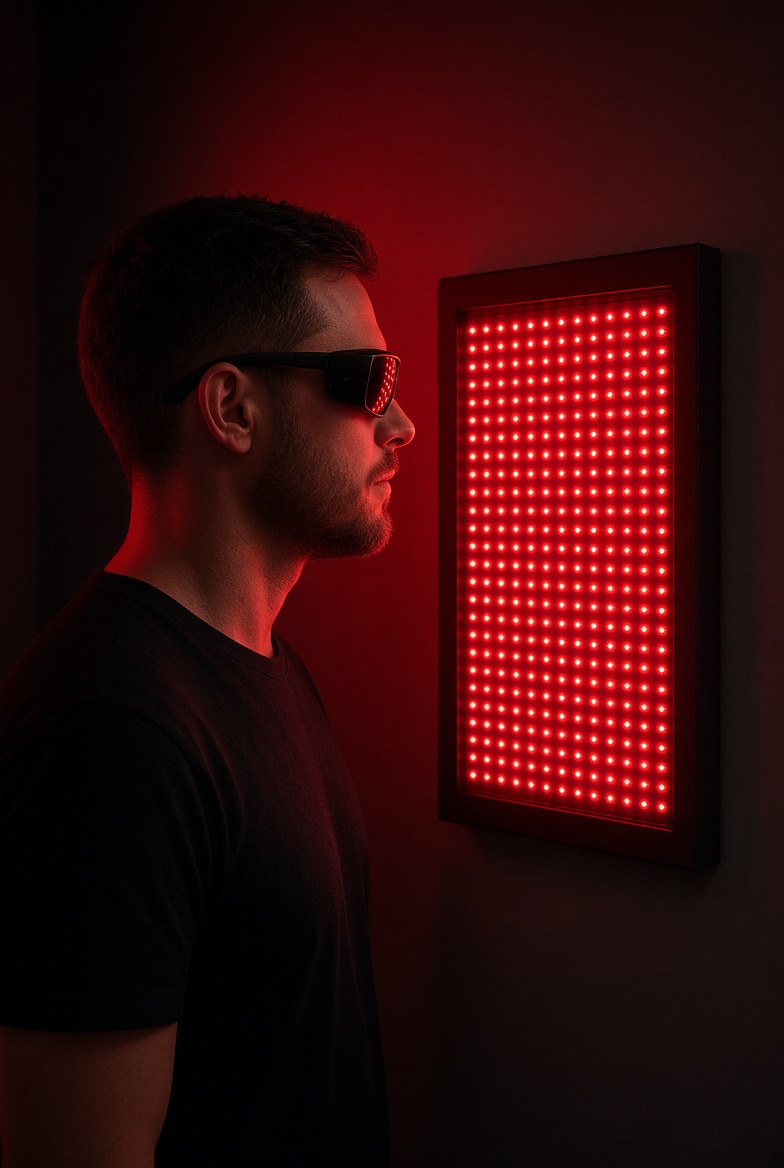
Dermatomyositis (DM) is a rare autoimmune condition characterized by muscle weakness and distinctive skin rashes, affecting roughly 5 in every million people . For patients managing chronic symptoms, the search for complementary therapies is understandable. One question that frequently arises in patient communities is whether red light therapy—also known as photobiomodulation (PBM)—can help.
The short answer: While red light therapy is not an established primary treatment for dermatomyositis, emerging evidence suggests it may offer benefits for specific cutaneous (skin) manifestations. However, its role remains experimental and should only be used under medical supervision.
Understanding Dermatomyositis: A Brief Overview
Dermatomyositis is an idiopathic inflammatory myopathy that predominantly affects the skin and proximal skeletal muscles . The condition most commonly presents in adults ages 50 to 70 and in children ages 5 to 15, with women being twice as likely to be diagnosed .
Key Clinical Features
The exact cause remains unknown, though genetic predisposition and autoimmune dysregulation are believed to play roles .
What Is Red Light Therapy (Photobiomodulation)?
Red light therapy, technically termed photobiomodulation (PBM), uses low-level red or near-infrared light to stimulate cellular processes. The proposed mechanisms include:
- Mitochondrial stimulation: Increased ATP (cellular energy) production
- Anti-inflammatory effects: Modulation of the NF-κB inflammatory pathway and increased IL-10 (an anti-inflammatory cytokine)
- Tissue repair: Promotion of collagen synthesis and cellular regeneration
These mechanisms have generated interest in PBM for various inflammatory and autoimmune conditions.
The Evidence for Red Light Therapy in Dermatomyositis
Direct Evidence: Cutaneous Manifestations
The most relevant published research comes from a 2023 case report in Clinical, Cosmetic and Investigational Dermatology. Zheng et al. described a patient with refractory facial rash associated with dermatomyositis who was successfully treated with narrowband intense pulsed light (IPL)—a related but distinct light-based therapy .
Key findings from this case report:
- The treatment reduced vasodilation and modulated inflammation associated with DM
- The authors noted that cutaneous manifestations of DM are often resistant to conventional treatments
- IPL was proposed as a novel option for refractory skin symptoms
Important distinction: IPL is not identical to red light therapy. It uses broad-spectrum, high-intensity pulses rather than continuous low-level red/near-infrared light. This limits direct extrapolation.
Supporting Evidence: Light Therapies in Connective Tissue Diseases
A 2015 review in the British Journal of Dermatology examined phototherapy, photodynamic therapy (PDT), and photopheresis in connective tissue diseases including lupus, morphoea/scleroderma, and dermatomyositis .
The authors concluded that despite the known photosensitivity association with these conditions, “light therapies, when used appropriately, may be legitimate therapeutic options for recalcitrant cutaneous manifestations” . However, the review did not identify robust randomized controlled trials specifically for red light therapy in DM.
Patient-Reported Experiences
Patient discussions on the Mayo Clinic Connect forum reveal mixed experiences:
- Some patients report their rheumatologists and dermatologists advised against red light therapy because it “can’t penetrate deep enough through muscle tissue” to address myositis
- One patient noted their doctor recommended avoiding red light therapy while on prednisone due to concerns that PBM stimulates the immune system, potentially counteracting immunosuppressive medications
- Others report using red light devices for muscle healing with varying degrees of perceived benefit
Critical Limitations and Safety Considerations
1. Depth of Penetration
Red light therapy penetrates only a few millimeters to a few centimeters into tissue. Dermatomyositis involves deep muscle inflammation, and experts note that PBM cannot reach affected muscle tissue to provide therapeutic benefit for myositis .
2. Photosensitivity Concerns
Dermatomyositis rashes are often photosensitive—worsened by UV exposure. While red light (630-700 nm) and near-infrared (800-1000 nm) are distinct from UV radiation, patients should exercise caution and consult their dermatologist before using any light-based device .
3. Potential Immune Interactions
One patient report indicates a physician’s concern that red light therapy may stimulate the immune system, potentially conflicting with immunosuppressive treatments like prednisone . This theoretical risk warrants further investigation.
4. Lack of Clinical Guidelines
Neither the American Academy of Dermatology’s guidelines for dermatomyositis care nor major rheumatology guidelines include red light therapy as a recommended treatment . Standard care remains corticosteroids, immunosuppressants, and IVIG .
Comparison: Standard Treatments vs. Red Light Therapy
Clinical Bottom Line
For muscle symptoms: Red light therapy is unlikely to be effective due to insufficient tissue penetration. Experts explicitly state it cannot reach deep muscle tissue where dermatomyositis inflammation occurs .
For skin symptoms: There is a theoretical basis and very limited clinical evidence (primarily from related light therapies like IPL) suggesting possible benefit for cutaneous manifestations. However, this remains experimental .
For systemic inflammation: While PBM has demonstrated anti-inflammatory effects in laboratory and animal studies, no clinical trials have validated these effects in dermatomyositis patients .
Recommendations for Patients
- Discuss with your rheumatologist and dermatologist before initiating any red light therapy regimen.
- Do not replace standard immunosuppressive therapy with light-based treatments.
- Be cautious with photosensitivity: Even non-UV light may theoretically trigger flares in some patients.
- If pursuing PBM for skin symptoms, consider it adjunctive only, and monitor closely for any adverse reactions.
- Seek clinical trials: The most valuable contribution patients can make is participating in well-designed research studies.
Conclusion
Red light therapy is not a proven treatment for dermatomyositis. While photobiomodulation has demonstrated anti-inflammatory properties in other contexts, the evidence specific to DM is limited to isolated case reports of related light therapies for cutaneous symptoms. The depth limitation for muscle involvement and potential immune interactions further temper enthusiasm.
For now, red light therapy should be considered investigational for dermatomyositis. Patients interested in exploring this option should do so only under specialist supervision and with realistic expectations. The foundation of DM management remains immunosuppressive pharmacotherapy, with physical therapy and sun protection as essential adjuncts.
Disclaimer: This article is for informational purposes only and does not constitute medical advice. Always consult with qualified healthcare providers regarding your specific condition and treatment options.