 Free Shipping
 Buy Now, Pay Later
 Eligible

Red Light Therapy for Macular Degeneration (AMD): Clinical Evidence, Candidacy, and Realistic Expectations
Bottom line: Red light therapy—clinically termed photobiomodulation (PBM)—has moved from speculative biohacking to a regulated medical procedure for a specific subset of dry age-related macular degeneration (AMD) patients. The FDA authorized the Valeda Light Delivery System in late 2024 based on a phase III trial showing a modest but statistically significant visual acuity benefit and a reduction in new geographic atrophy. However, leading retinal specialists emphasize that the effect is measured in letters on an eye chart, not restored reading vision, and that the therapy is not appropriate for everyone. This article examines what the evidence actually shows, who qualifies, and what the limitations are.
What Is Photobiomodulation and How Does It Target AMD?
Photobiomodulation uses specific wavelengths of low-level red and near-infrared light to interact with mitochondrial chromophores—primarily cytochrome c oxidase—in retinal cells. The proposed mechanism is metabolic: by improving mitochondrial efficiency, PBM may reduce oxidative stress, decrease inflammation, and enhance cellular waste clearance in the retinal pigment epithelium (RPE), the layer most vulnerable to AMD-related degeneration .
AMD is characterized by drusen accumulation, RPE dysfunction, and chronic low-grade inflammation. PBM does not remove drusen mechanically or reverse existing atrophy; instead, it is hypothesized to modulate the metabolic environment that drives disease progression .
The Valeda system, the only FDA-authorized device for this indication in the United States, delivers three wavelengths: 590 nm (yellow), 660 nm (red), and 850 nm (near-infrared). A treatment series consists of nine sessions over three to five weeks, repeated approximately every four months .
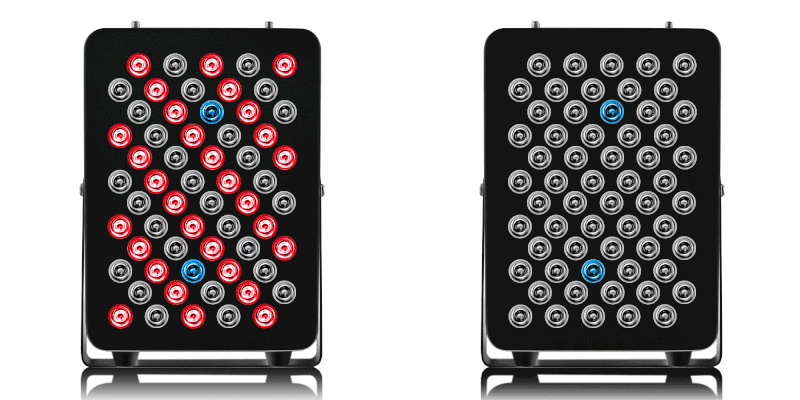
VELLGUS Elite V2
THE #1 RATED RED LIGHT DEVICE
Vellgus Red Light Elite V2 is an incredible way to experience the benefits of multiwave technology spectrum: 480nm 630nm, 660nm, 810nm, 830nm, 850nm. No other red/NIR light device available provides the multi-wave R+| NIR+ spectral output.
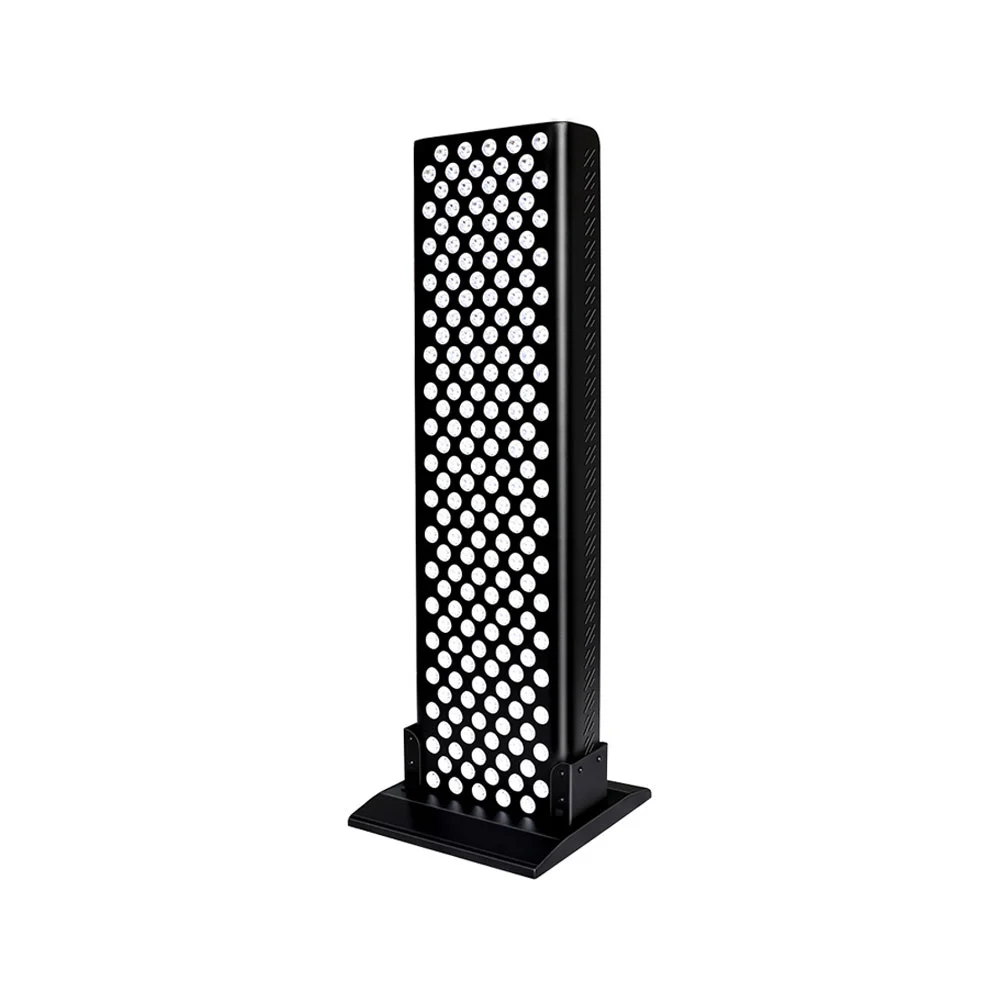
VELLGUS max 300
THE #1 RATED FULL BODY RED LIGHT DEVICE
Upgrade your red light therapy experience and take it to the next level with VELLGUS Red Light Max 300. This device is specifically designed for those wanting a brighter and more intense red light treatment
The Evidence: What the LIGHTSITE III Trial Demonstrated
The FDA’s De Novo authorization (DEN230083, November 2024) was based primarily on the LIGHTSITE III trial, a double-masked, randomized, sham-controlled, multicenter study involving 100 subjects and 148 eyes randomized 2:1 to PBM or sham .
At 24 months, the treated group showed a mean visual acuity gain of approximately 5.4 to 6.2 letters compared with 3.0 letters in the sham group, depending on the analysis timepoint . More notably, 24.0% of sham eyes developed new geographic atrophy compared with 6.8% of treated eyes (P = 0.007)—a finding that, if validated in larger populations, would suggest a disease-modifying effect rather than merely symptomatic improvement .
However, independent analyses have raised flags. A 2024 systematic review and meta-analysis of three randomized trials (247 eyes) found that while PBM produced statistically significant improvements in best-corrected visual acuity (mean difference 1.76 letters) and drusen volume, these differences did not meet the threshold for minimal clinically important difference (MCID). The authors concluded that current sample sizes are insufficient for reliable conclusions and that all included studies carried a high risk of bias .
A separate prospective study (PBM4AMD) of 38 patients found that visual acuity and contrast sensitivity improved at 12 weeks but returned to baseline by 24 weeks, and scotopic retinal sensitivity actually decreased at six months. Two patients developed macular neovascularization during the study period .
Dr. Nieraj Jain, a retinal specialist at Emory University quoted by the American Academy of Ophthalmology, summarized the clinical tension: “Photobiomodulation certainly holds promise, but we look forward to seeing more data. We don’t know how these outcomes will hold up in the real world” .
Comparison: PBM vs. Other Approaches for Dry AMD
| Feature | Photobiomodulation (Valeda) | AREDS2 Supplements | Complement Inhibitors (Syfovre/Izervay) |
|---|---|---|---|
| Indication | Dry AMD with specific visual acuity and drusen criteria | Intermediate AMD or advanced AMD in one eye | Geographic atrophy secondary to AMD |
| Route | Non-invasive light sessions (in-clinic) | Oral | Intravitreal injection |
| Primary benefit shown | ~1 line (5 letters) visual acuity gain vs. sham at 2 years; reduced new GA incidence | ~25% reduction in progression to advanced AMD | Slowing of GA lesion growth |
| Frequency | 9 sessions over 3–5 weeks, repeated every 4 months | Daily | Every 1–2 months |
| FDA Status | De Novo authorized (Class II device) | Dietary supplement (not FDA-regulated as drug) | FDA approved |
| Insurance Coverage | Generally not covered; out-of-pocket | Variable | Covered for approved indication |
| Key Limitation | Small trial; effects may not persist; optimal patient selection unclear | No effect on GA progression | Does not improve vision; injection burden |
Who Is Actually a Candidate?
The FDA authorization is narrower than marketing materials sometimes suggest. Valeda is authorized for patients with best-corrected visual acuity of 20/32 through 20/70 who have dry AMD characterized by at least three medium drusen, large drusen, or non-central geographic atrophy, and who do not have neovascular (wet) AMD or center-involving geographic atrophy .
In practical terms:
- Appropriate: Early to intermediate dry AMD with measurable vision loss but preserved central acuity.
- Inappropriate: Patients with 20/25 or better vision (outside studied population), patients with wet AMD, and patients with geographic atrophy involving the foveal center.
- Uncertain: Patients with reticular pseudodrusen or other specific phenotypes are being studied in ongoing trials but are not yet established candidates .
Dr. Christina Weng of Baylor College of Medicine told MedPage Today that “we are not yet able to identify which patients are likely to benefit the most from PBM,” and noted that in LIGHTSITE III, five eyes in the PBM arm developed wet AMD versus one in the sham arm—a safety signal warranting further investigation .
Cost, Access, and the Real-World Burden
PBM is not typically covered by insurance. A New York retinal clinic quoted by MedPage Today charges $2,500 for nine visits treating both eyes**, with a recommended schedule of 27 treatments per year . Other sources indicate annual out-of-pocket costs ranging from **$3,500 to $6,600 depending on protocol intensity and whether one or both eyes are treated . Medicare has not assigned a payment amount, and a temporary Category III billing code does not guarantee reimbursement .
The time burden is also non-trivial: nine clinic visits over three to five weeks, repeated three times annually, requires substantial commitment from patients who may already be managing multiple age-related health conditions.
What About At-Home Red Light Devices?
No over-the-counter red light device has been cleared or authorized by the FDA for treating AMD. The dosing, wavelength precision, and ocular safety parameters of clinical PBM are specific to the regulated device used in trials. The American Academy of Ophthalmology has stated that “currently, ophthalmologists do not have evidence to recommend red light therapy for any patients” outside the context of clinical trials or the specific authorized indication . Using unregulated light sources on the eyes carries theoretical risks, including photochemical damage if wavelengths or intensities are inappropriate.
Frequently Asked Questions
1. Can red light therapy cure or reverse macular degeneration?
No. The evidence does not support reversal of existing damage. The LIGHTSITE III trial showed a mean improvement of roughly five letters on an eye chart compared with sham—approximately one line—and a reduction in the development of new geographic atrophy. It does not restore lost photoreceptors or eliminate drusen entirely. The FDA authorization language describes “improved mean visual acuity” of approximately one line over two years . Any claim of cure or regeneration is not supported by clinical data.
2. Is red light therapy FDA-approved for AMD?
It is FDA-authorized through the De Novo pathway, not fully approved through the more rigorous premarket approval (PMA) process that drugs and high-risk devices undergo. The distinction matters: authorization allows marketing based on a reasonable assurance of safety and effectiveness, but the evidence base is smaller than what full approval requires. The American Academy of Ophthalmology notes that some insurers may view the treatment as experimental or investigational and decline coverage .
3. How much does red light therapy for AMD cost, and will insurance pay?
Most patients pay out of pocket. Reported costs range from $2,000 to $3,600 for an initial treatment series (one or both eyes), with annual maintenance costs potentially reaching $3,500 to $6,600 depending on frequency . Insurance coverage is inconsistent; Medicare has not established a national payment amount, and private payers vary. Patients should request a written cost estimate and check with their insurer before committing.
4. Is red light therapy safe for the eyes?
In the LIGHTSITE III trial, the treatment was generally well-tolerated with no significant adverse events reported during sessions. However, a small imbalance in conversion to wet AMD was observed (five eyes in the PBM arm versus one in sham), which researchers have flagged as requiring further study . Long-term safety data beyond 24 months are limited. Patients with a history of wet AMD, center-involving geographic atrophy, or photosensitizing conditions should not use PBM without explicit clearance from a retinal specialist.
5. What questions should I ask my eye doctor before considering PBM?
Ask specifically: (1) Does my visual acuity and AMD phenotype fall within the FDA-authorized indication (20/32 to 20/70, no wet AMD, no center-involving GA)? (2) What is the realistic expected benefit for my specific situation, given that the average effect in trials was approximately one line? (3) What is the total out-of-pocket cost for the first year, including maintenance sessions? (4) What is the plan if my vision does not improve or if I develop wet AMD during treatment? (5) Is there an ongoing clinical trial I might be eligible for instead? A retinal specialist with experience in AMD management is the appropriate clinician to have this conversation, not a general optometrist or a sales representative from a device manufacturer.