 Free Shipping
  Buy Now, Pay Later
  Eligible

Does Red Light Therapy Help with GABA? A Clinical Review of the Evidence
Red light therapy may influence GABAergic signaling, but the evidence is complex and context-dependent. Preclinical research demonstrates that red light can activate GABAergic neurons in specific brain regions, and photobiomodulation has been shown to modulate GABA receptor expression. However, the direction of these effects varies by brain region, light parameters, and whether the exposure is direct or visual.
For patients and clinicians considering red light therapy for conditions related to GABA dysfunction—such as anxiety, sleep disorders, or chronic pain—understanding the nuances of this evidence is essential. This review examines what the current research actually shows.
Understanding GABA and Its Role in Health
Gamma-aminobutyric acid (GABA) is the primary inhibitory neurotransmitter in the central nervous system. It counterbalances glutamate, the brain’s main excitatory neurotransmitter, and is critical for:
- Anxiety regulation: Reduced GABAergic signaling is associated with anxiety disorders
- Sleep architecture: GABA promotes sleep onset and maintenance
- Pain modulation: GABAergic interneurons in the spinal cord and brain suppress nociceptive signals
- Seizure threshold: GABA deficiency predisposes to neuronal hyperexcitability
The therapeutic appeal of red light therapy lies in its potential to modulate this system non-pharmacologically, potentially avoiding the side effects associated with benzodiazepines and other GABAergic drugs.
What Preclinical Research Shows
Red Light Activates GABAergic Neurons in the Visual System
A pivotal 2023 study published in Neurobiology of Disease investigated how different light wavelengths affect pain processing through the ventral lateral geniculate nucleus (vLGN), a visual system structure.
Using fiber photometry and chemogenetics in mice, researchers found that red light exposure significantly activated GABAergic neurons in the vLGN—approximately 75% of these neurons showed c-fos immunolabeling (a marker of neuronal activation) after red light exposure, compared to baseline levels. Green light, by contrast, predominantly activated glutamatergic neurons.
However, the behavioral outcome was unexpected: Red light promoted nociception (increased pain sensitivity), while green light produced antinociception. This suggests that activating GABAergic neurons in this specific visual pathway may not produce the analgesic effects one might assume from GABA’s general inhibitory role. The functional significance of this pathway-specific activation requires further study.
Photobiomodulation Alters GABA Levels in the Brain
A 2008 study in Photomedicine and Laser Surgery examined the effects of infrared laser (830 nm) at three intensities on amino acid neurotransmitters in rat cortex and hippocampus.
The findings were intensity-dependent:
| Laser Intensity | Brain Region | Effect on GABA |
|---|---|---|
| 500 mW | Hippocampus | Significant decrease |
| 190 mW | Hippocampus | No significant change reported |
| 90 mW | Hippocampus | Increase in GABA |
The 90 mW intensity produced the most pronounced neurochemical inhibition after 7 days, with decreased excitatory amino acids (glutamate, aspartate) and increased inhibitory glycine. The authors concluded that this may explain photobiomodulation’s neurosuppressive effects on cortical and hippocampal tissue.
This study highlights a critical principle: light parameters matter enormously. The same wavelength at different intensities produced opposite effects on hippocampal GABA.
PBM Modulates GABA Receptor Expression
Research using a collagenase-induced tendinitis model in rats demonstrated that photobiomodulation (PBM) increased GABAα1 receptor gene expression while decreasing GABAα2 expression in affected tissue. This suggests PBM may modulate the pain process through receptor-level regulation, not just neurotransmitter levels.
The study also found PBM decreased bradykinin (B1) and neurokinin-1 (NK-1) receptor expression—both involved in pain signaling—indicating a multi-target anti-inflammatory and analgesic mechanism.
Mechanistic Considerations and Limitations
Direct vs. Visual Pathways
An important distinction must be made between direct transcranial photobiomodulation (light applied to the scalp) and visual light exposure (light entering through the eyes). The vLGN studies used visual exposure, which triggers specific visual-somatosensory circuits. Transcranial PBM, by contrast, affects cortical tissue more diffusely through mitochondrial stimulation.
The Redox Modulation Hypothesis
A 2003 study in European Journal of Neuroscience identified a potential mechanism for light’s effects on GABA: GABA(A) receptors can be reversibly modulated by light through redox-dependent allosteric mechanisms. Brief light exposure enhanced GABA-induced currents in cortical neurons, and this effect was attenuated by chemical reduction of the receptor. This suggests light may directly sensitize GABA receptors to endogenous GABA, independent of neurotransmitter level changes.
Evidence Gaps
- Human studies are lacking: Most evidence comes from rodent models. No controlled human trials have directly measured GABA levels or GABAergic function after red light therapy.
- Parameter heterogeneity: Studies use widely varying wavelengths (630–1072 nm), intensities, and durations, making comparison difficult.
- Direction of effect unclear: Some evidence suggests red light promotes nociception via GABAergic activation, which contradicts the assumption that increased GABAergic activity is universally beneficial.
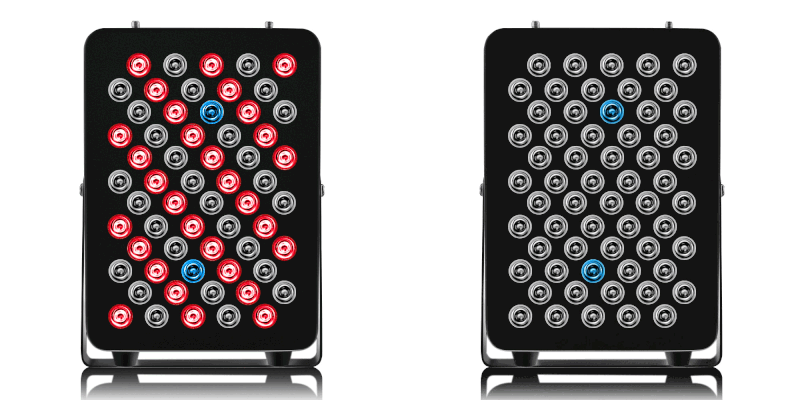
VELLGUS Elite V2
THE #1 RATED RED LIGHT DEVICE
Vellgus Red Light Elite V2 is an incredible way to experience the benefits of multiwave technology spectrum: 480nm 630nm, 660nm, 810nm, 830nm, 850nm. No other red/NIR light device available provides the multi-wave R+| NIR+ spectral output.
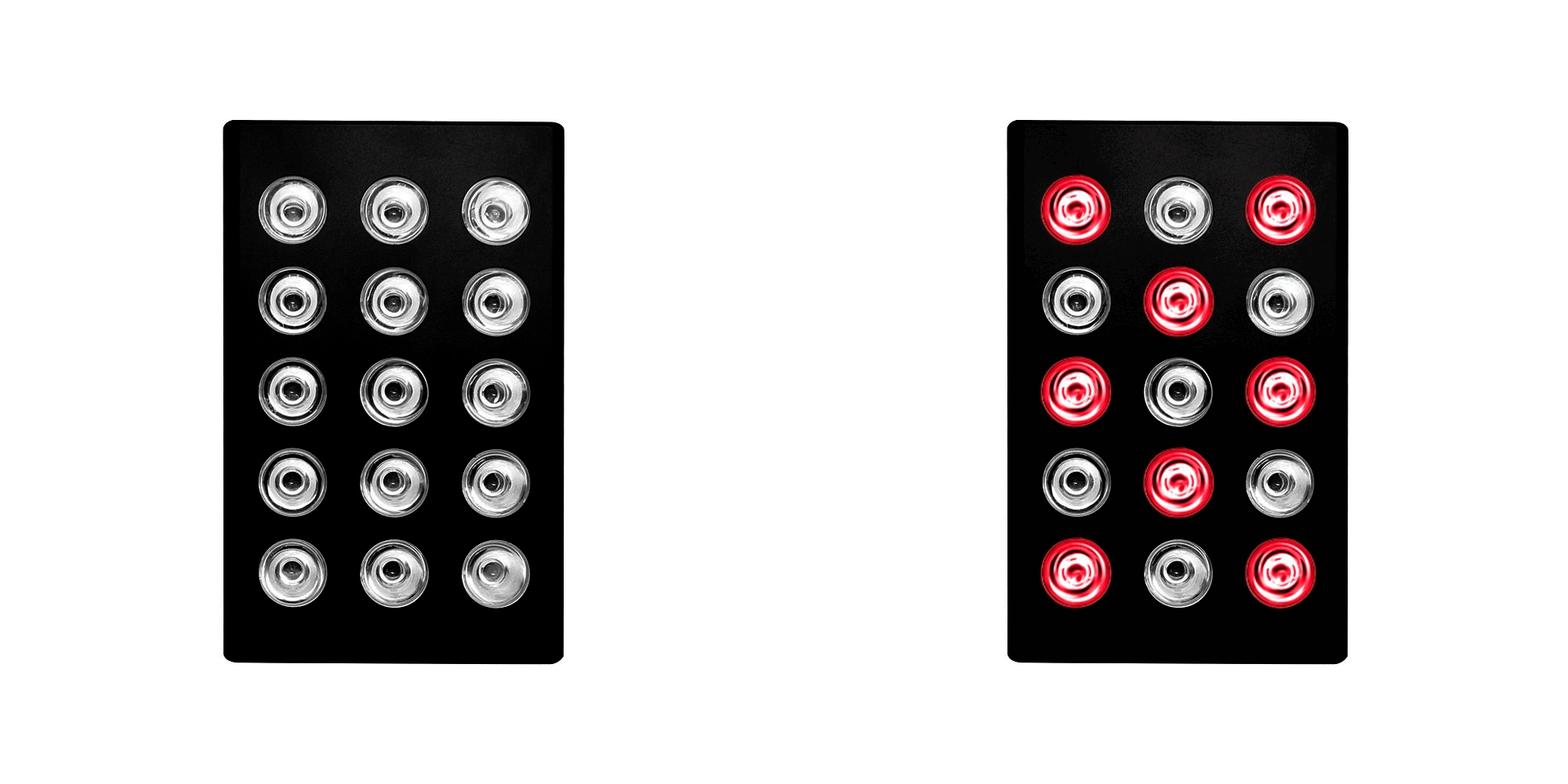
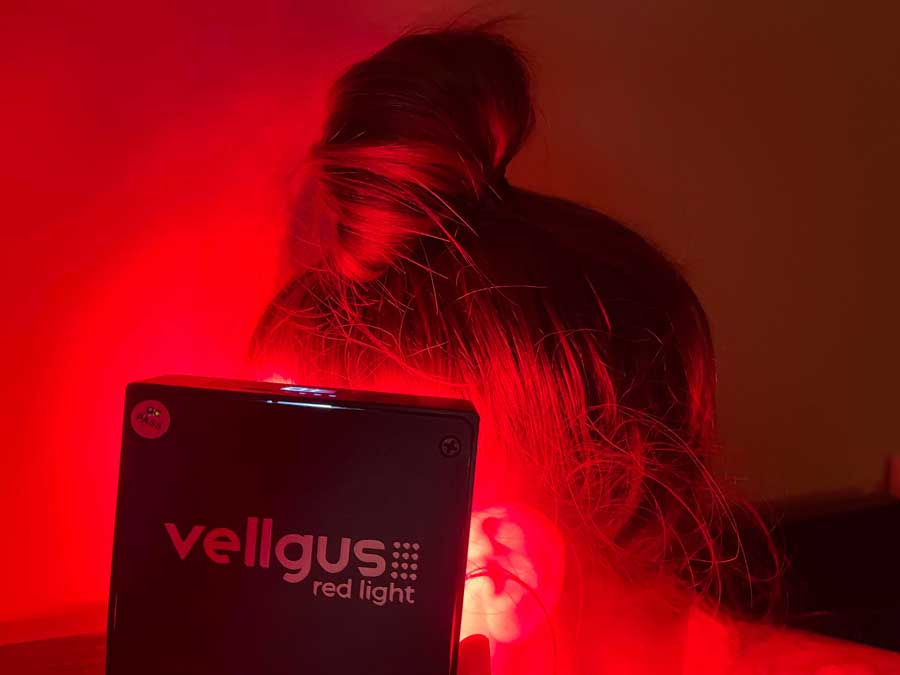
VELLGUS mini
THE #1 RATED FULL BODY RED LIGHT DEVICE
The Vellgus red light mini is the ultimate combination of power and portability. Its low EMF, no flicker dual NIR and red-Light therapy device offers the perfect blend of near infrared light at 850nm and red light at 660nm in one package.
Summary of Evidence
Clinical Implications
For clinicians considering red light therapy for GABA-related conditions:
- Do not assume a simple “more GABA = better outcomes” model. The vLGN research demonstrates that GABAergic activation in specific circuits can produce unwanted effects (hyperalgesia).
- Light parameters are critical. Intensity, wavelength, duration, and application site determine whether GABAergic effects are facilitatory or inhibitory.
- Transcranial vs. systemic applications may differ fundamentally. Direct PBM to the scalp affects cortical tissue; whole-body or visual exposure engages different pathways.
- Receptor-level effects may outlast neurotransmitter changes. The redox modulation of GABA(A) receptors suggests potential for sustained effects beyond immediate exposure.
Conclusion
Red light therapy does interact with the GABAergic system, but the relationship is not straightforward. Preclinical evidence shows that red light can activate GABAergic neurons, modulate GABA receptor expression, and alter brain GABA concentrations—but the direction and clinical significance of these effects depend heavily on light parameters and the specific neural circuit involved.
The most honest assessment is that red light therapy’s effects on GABA are real but incompletely characterized. Patients should be cautious about claims that red light therapy reliably “boosts GABA” for anxiety or sleep, as such assertions outpace the current evidence base. Well-designed human studies measuring GABAergic function before and after controlled PBM protocols are needed before clinical recommendations can be made with confidence.