 Free Shipping
  Buy Now, Pay Later
  Eligible

Does Red Light Therapy Help Delayed Onset Muscle Soreness? A Comprehensive Review
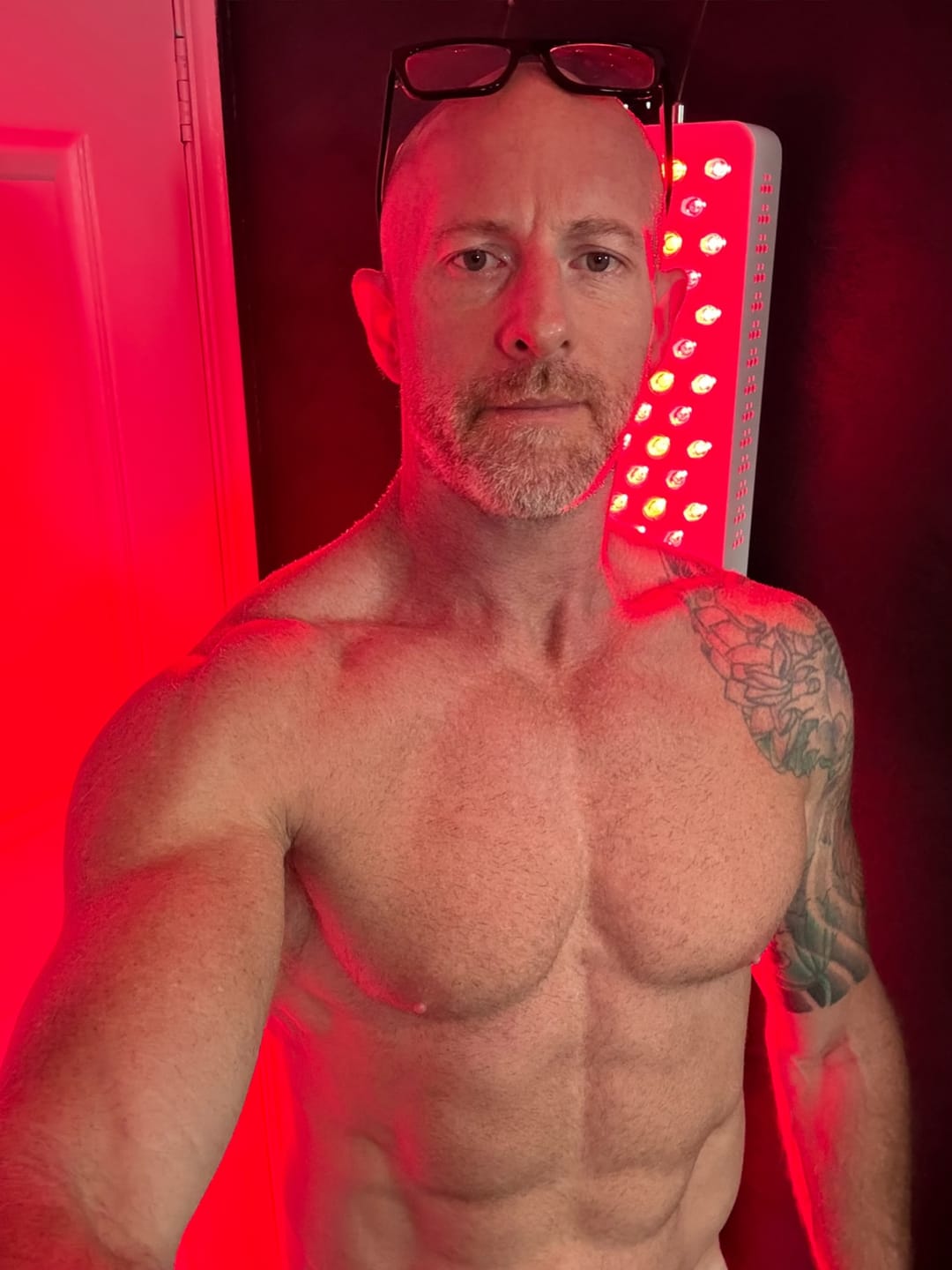
Delayed onset muscle soreness (DOMS) is a familiar challenge for athletes, fitness enthusiasts, and anyone who has pushed their physical limits. Characterized by muscle tenderness, stiffness, and pain that typically peaks 24 to 72 hours after unaccustomed or high-intensity exercise, DOMS can temporarily impair performance and range of motion . While numerous interventions exist, red light therapy—also known as photobiomodulation (PBM)—has emerged as a promising non-invasive recovery strategy. This article examines the current evidence, mechanisms, and practical considerations for using red light therapy to manage DOMS.
What Is Red Light Therapy (Photobiomodulation)?
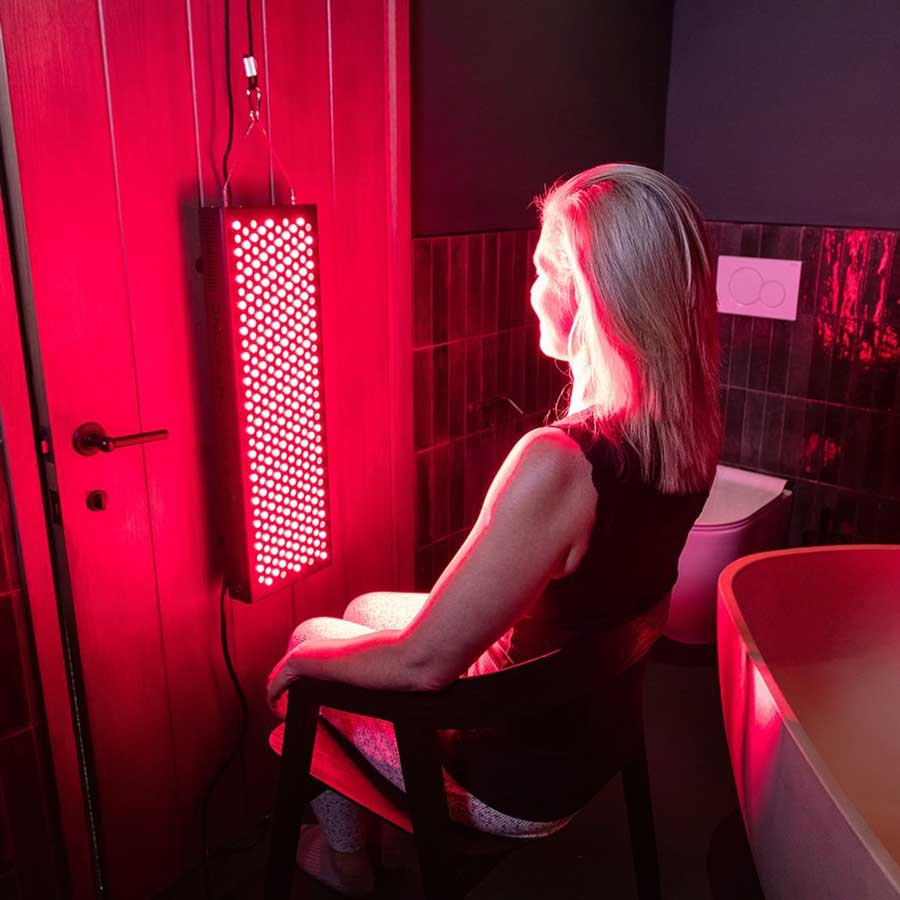
Red light therapy, scientifically termed photobiomodulation (PBM), involves exposing tissue to low-level red or near-infrared light, typically in the wavelength range of 600 to 900 nanometers . Unlike ultraviolet radiation, these wavelengths do not damage DNA. Instead, they penetrate the skin and muscle tissue, where they are absorbed by photoreceptors within the mitochondria—specifically cytochrome c oxidase .
The proposed mechanism is elegant: light absorption enhances mitochondrial activity, increasing adenosine triphosphate (ATP) production. This cellular energy boost supports the repair of exercise-induced microtears in muscle fibers, modulates oxidative stress, and reduces inflammation . Additionally, PBM appears to improve local circulation, facilitating the clearance of metabolic byproducts associated with muscle damage .
The Evidence: What Research Shows
Meta-Analytic Findings
The most rigorous evidence comes from systematic reviews and meta-analyses of randomized controlled trials. A comprehensive meta-analysis published in 2026, which included 13 randomized controlled trials, evaluated the effects of PBM on DOMS and muscle strength recovery . Key findings included:
- Pain Reduction: Photobiomodulation therapy significantly reduced self-reported DOMS on the visual analogue scale (VAS) immediately after exercise (mean difference = −15.91) and at 24 hours post-exercise (MD = −7.57) .
- Pressure Pain Threshold: Algometry measurements demonstrated statistically significant improvements immediately after exercise and at 48, 72, and 96 hours .
- Strength Preservation: Peak torque was significantly higher in PBM groups at every measured time point—immediately after exercise and at 24, 48, 72, and 96 hours .
These findings align with a 2025 umbrella review that classified phototherapy as having Class IV evidence for pain reduction at multiple follow-up intervals (24, 48, 72, and 96 hours post-exercise) . While Class IV represents lower-certainty evidence, the consistency of findings across time points is notable.
A separate 2025 systematic review and meta-analysis similarly concluded that photomodulation therapy may attenuate DOMS symptoms and accelerate functional recovery .
Nuanced Findings and Limitations
Not all research has been uniformly positive. An earlier meta-analysis from 2016 found insufficient evidence to support substantial effects of low-level phototherapy on skeletal muscle injury and pain, though the authors noted that definitive conclusions were limited by small sample sizes and heterogeneity across studies .
More recent narrative reviews acknowledge that while most studies suggest benefits, some report no significant differences between PBM and placebo . This variability likely stems from differences in treatment parameters, including wavelength, energy dose, timing of application, and device type .
Treatment Parameters: What Matters for Efficacy
The effectiveness of red light therapy for DOMS is highly dependent on treatment parameters. Research suggests that not all protocols are equally effective.
Wavelength Selection
Both red (approximately 630–660 nm) and near-infrared (approximately 810–940 nm) wavelengths have been studied. Red light is absorbed more superficially, while near-infrared light penetrates deeper into muscle tissue . A 2022 study found that both 630 nm and 940 nm wavelengths attenuated exercise-induced muscle damage without impairing adaptive responses .
Energy Dose
Dose appears to be a critical factor. The 2026 meta-analysis found that for reducing DOMS, different doses had effects, but for strength preservation, higher doses produced better outcomes . Analysis suggests that favorable results are often reported with total energies of 180–300 joules per treated area .
Importantly, higher power is not necessarily better. A randomized controlled trial comparing commercial devices found that low-powered pulsed laser/light demonstrated superior outcomes for DOMS, strength maintenance, and creatine kinase reduction compared to high-powered continuous laser/light . The high-powered continuous device actually showed increased creatine kinase activity compared to placebo, suggesting that excessive power may be counterproductive .
Timing of Application
PBM may be applied either before (preconditioning) or after exercise. Both approaches have shown benefits in research . The meta-analytic evidence indicates that pre- or post-exercise application can reduce DOMS and improve strength recovery .
Comparison of Photobiomodulation Evidence Across Time Points
Note: Class IV evidence indicates significant effects based on lower-quality systematic reviews; certainty is limited by heterogeneity and methodological concerns .
Expert Perspectives
While specific physician citations from named doctors were not available in the search results, the broader scientific literature reflects a cautious but growing enthusiasm for PBM in sports recovery.
A 2026 narrative review concluded that “PBM shows promise as a supportive recovery strategy for athletes and physically active individuals, particularly in contexts requiring rapid post-exercise recovery” . However, the authors emphasized that “standardized treatment protocols and further high-quality studies are necessary to confirm its efficacy and determine optimal application parameters” .
Dr. Cleber Ferraresi and colleagues, in a comprehensive review published in the Journal of Biophotonics, noted that PBM can increase muscle mass gained after training and decrease inflammation and oxidative stress in muscle biopsies . They raised the provocative question of whether PBM should be permitted in athletic competition, given its potential ergogenic effects .
Practical Recommendations
For individuals considering red light therapy for DOMS management, the following parameters are supported by the current evidence:
- Wavelength: Use devices emitting red (630–660 nm) or near-infrared (810–850 nm) light, or a combination .
- Energy Dose: Target 180–300 joules per treated muscle group . Avoid extremely high-power devices, as evidence suggests low-powered pulsed light may be superior .
- Timing: Apply either before or after exercise. Both approaches have demonstrated benefits .
- Frequency: For acute DOMS management, a single treatment session may be sufficient. For ongoing recovery support, regular use during high-volume training cycles may be beneficial .
- Coverage: Ensure the device adequately covers the affected muscle groups. Treatment duration will vary based on device power and size .
Safety Considerations
Red light therapy is generally well-tolerated with minimal side effects when used appropriately. Unlike ultraviolet radiation, red and near-infrared wavelengths do not damage DNA . However, individuals should avoid looking directly into high-intensity light sources and should consult healthcare providers if they have photosensitive conditions or are taking photosensitizing medications.
Conclusion
The current evidence suggests that red light therapy (photobiomodulation) can help reduce delayed onset muscle soreness and accelerate recovery of muscle strength following intense exercise. Meta-analytic data demonstrate significant benefits for pain reduction, particularly in the first 24 hours, and for strength preservation up to 96 hours post-exercise . However, the evidence base is limited by heterogeneity in treatment protocols, relatively small sample sizes, and predominantly low-to-moderate methodological quality in some reviews .
Red light therapy appears most effective when applied with appropriate parameters—specifically, low-powered pulsed or continuous devices delivering approximately 180–300 joules to the target muscle tissue. As a non-invasive, drug-free intervention with a favorable safety profile, PBM represents a reasonable addition to a comprehensive recovery strategy that includes adequate sleep, nutrition, and hydration. Patients and athletes should consult with sports medicine physicians or physical therapists to determine whether red light therapy is appropriate for their specific recovery needs and to optimize treatment parameters based on individual circumstances.