 Free Shipping
 Buy Now, Pay Later
 Eligible

Red Light Therapy for Myopia: A Clinically Grounded Guide for Practitioners and Parents
Bottom line: Repeated low-level red-light therapy (RLRL) is among the most promising non-pharmacological interventions for slowing childhood myopia progression, with randomized trials showing meaningful reductions in axial elongation compared with single-vision spectacles and, in some analyses, outperforming 0.01% atropine and orthokeratology alone. However, it is not a uniform “cure,” safety is device-dependent, rebound after cessation is real, and long-term ocular safety boundaries remain incompletely defined.
Why Myopia Control Matters Now More Than Ever
The World Health Organization projects that by 2050, half the global population will be myopic, with nearly one in ten at risk of high myopia and its sight-threatening complications . For clinicians and parents, the question is no longer whether to intervene early, but which intervention offers the most favorable risk-benefit profile for a given child.
Red light therapy has entered that conversation with unusual velocity. Since the first large randomized trials emerged from China, RLRL has moved from investigational curiosity to clinical adoption across East Asia and, increasingly, Western markets. But rapid adoption without standardized protocols invites confusion. This article separates what the evidence supports from what remains speculative.
What Is Repeated Low-Level Red-Light Therapy?
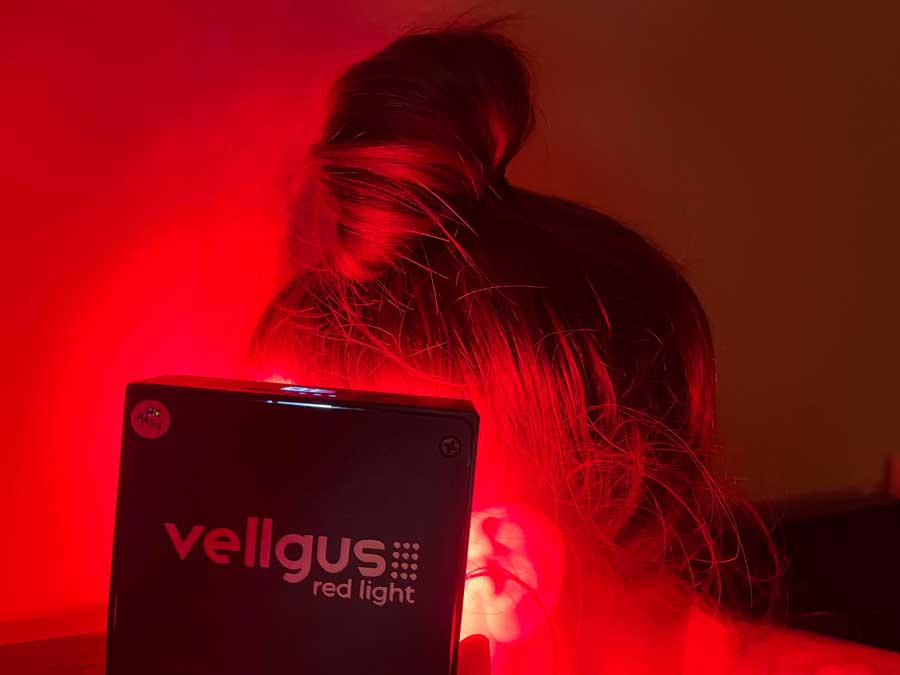
RLRL typically uses a desktop or handheld device emitting 650 nm red laser or LED light at low power (often 2 mW or less). The standard protocol studied in most trials involves two 3-minute sessions per day, separated by at least four hours, five to seven days per week . The child views the light through a fixed aperture while wearing their habitual refractive correction.
The biological rationale centers on photobiomodulation: red light exposure appears to enhance mitochondrial activity in retinal photoreceptors and, most consistently in human studies, produces rapid choroidal thickening and increased choroidal perfusion . Choroidal thickening has emerged as a surrogate marker for effective myopia control across multiple interventions, including orthokeratology and atropine .
The Evidence: What Randomized Trials Show
Efficacy Against Single-Vision Spectacles
The strongest efficacy data come from randomized controlled trials conducted predominantly in Chinese pediatric populations. A structured narrative review published in 2026 summarized that short-term efficacy has been consistently favorable, with several RCTs reporting substantially less axial elongation than spectacle or sham controls, and some demonstrating measurable axial shortening during active treatment .
Head-to-Head Comparisons with Established Treatments
A 2025 systematic review and meta-analysis published in Scientific Reports pooled seven studies (691 patients) comparing RLRL against conventional myopia control methods. The findings were notable:
| Comparison | Axial Length Difference (WMD) | Interpretation |
|---|---|---|
| RLRL vs. all conventional treatments | −0.24 mm (95% CI: −0.33 to −0.14) | Favoring RLRL |
| RLRL vs. orthokeratology (OK) | −0.15 mm (95% CI: −0.27 to −0.04) | Favoring RLRL |
| RLRL vs. 0.01% atropine | −0.25 mm (95% CI: −0.29 to −0.20) | Favoring RLRL |
| RLRL adjunct to OK vs. OK alone | −0.35 mm (95% CI: −0.46 to −0.24) | Favoring combination |
Data from meta-analysis of seven studies, all conducted in China .
The same meta-analysis found that RLRL as an adjunct to orthokeratology outperformed monotherapy, suggesting a role for combination approaches in children who respond poorly to OK alone . A separate randomized trial in Melbourne, Australia—the first in a multi-ethnic Western cohort—was launched to test generalizability beyond East Asian populations, where the majority of evidence has been generated .
The Premyopia Question
A 2026 systematic review and meta-analysis examining interventions for premyopic children (those not yet myopic but at elevated risk) found that RLRL showed potential benefit for reducing myopic shift, but the certainty of evidence was rated very low due to incomplete technical reporting and limited replication . This reinforces that RLRL’s strongest evidence base is in children with established myopia, not prevention.
Safety: Reassuring Trial Data, but Device-Specific Caution Required
What Clinical Trials Show
A 12-month randomized controlled trial of 108 children found that RLRL was safe within the study period based on multifocal electroretinography and contrast sensitivity testing. Notably, the study observed significant increases in photoreceptor outer segment reflectance at 6 and 12 months, a finding whose long-term implications require further observation .
A 2026 review described clinical trial safety findings as “generally reassuring” but emphasized that safety cannot be generalized across all red-light devices . This is a critical distinction: the published efficacy and safety data overwhelmingly derive from a specific device (Eyerising, 650 nm) with defined dosimetry. Devices marketed as “red light therapy” without independent radiometric validation should not be assumed equivalent.
Case Reports of Retinal Changes
Isolated case reports have documented transient optical coherence tomography (OCT) abnormalities, including ellipsoid zone disruption and dome-shaped hyperreflectivity between the RPE and ellipsoid zone. These findings were largely asymptomatic or associated with transient visual changes, and most improved or resolved after treatment reduction or cessation . A proposed mechanism involves a transient imbalance between photoreceptor metabolic demand and RPE clearance capacity—essentially, a high-turnover state that occasionally overwhelms clearance .
Clinical implication: Baseline OCT imaging and periodic monitoring during treatment represent a prudent standard of care, particularly for children with pre-existing retinal conditions. Mild asymptomatic OCT changes may warrant reduced treatment frequency rather than immediate discontinuation.
The Rebound Question
Perhaps the most clinically important caveat: rebound axial elongation after RLRL cessation has been documented. A two-year post-trial follow-up found that children who discontinued treatment experienced progression rates comparable to untreated controls in the year following cessation, though cumulative benefits may partly persist . This mirrors patterns seen with other myopia interventions and underscores that RLRL is a treatment to be sustained during the progression years, not a course to be completed.
Ongoing research is specifically examining whether gradual tapering can mitigate rebound, but no evidence-based discontinuation protocol currently exists .
Comparison Table: RLRL in Context
Practical Guidance for Clinicians and Parents
Who may be a candidate? Children with documented myopia progression (typically ≥0.50 D/year or axial elongation ≥0.20 mm/year) who are motivated for daily treatment and have access to a validated device with proper parental supervision.
What monitoring is appropriate? Baseline cycloplegic refraction and axial length, baseline OCT, and periodic follow-up (every 3–6 months) with axial length measurement. OCT monitoring at 6–12 months is reasonable, especially for early adopters of the technology .
What about device selection? Prioritize devices with published clinical trial data, defined wavelength and power specifications, and compliance monitoring. The Eyerising device is the most extensively studied; other devices may not be equivalent .
Frequently Asked Questions
1. Does red light therapy actually reverse myopia?
No. RLRL slows progression and, in some trials, produces small measurable axial shortening, but it does not eliminate existing myopia or restore normal eye length. The goal is to reduce the trajectory toward high myopia and its associated risks.
2. Is red light therapy safe for my child’s eyes?
Clinical trial data up to 12 months are generally reassuring, with no serious adverse events reported in major RCTs . However, isolated case reports of transient OCT changes exist, and safety is device-specific. Baseline and periodic retinal imaging is advisable, particularly for devices without independent safety validation .
3. How does red light therapy compare to atropine eye drops?
In a meta-analysis of head-to-head studies, RLRL outperformed 0.01% atropine for axial length control (WMD −0.25 mm favoring RLRL) . However, atropine has a longer safety track record, and higher concentrations (0.05%) may offer efficacy closer to RLRL. The choice often depends on child tolerance, family preference, and clinician experience.
4. What happens if we stop treatment?
Rebound progression has been documented. Children who discontinue RLRL after one year may experience axial elongation rates comparable to untreated peers in the subsequent year . Treatment should generally be continued through the years of active myopia progression, and any discontinuation should be discussed with the managing eye care professional.
5. Can red light therapy be combined with other myopia treatments?
Yes, and evidence suggests combination may be beneficial. RLRL added to orthokeratology in children who were poor OK responders produced significantly better axial control than OK alone (−0.35 mm difference) . Combination approaches are an active area of clinical investigation, including an ongoing trial in Spain .
This article is for informational purposes and does not constitute medical advice. Treatment decisions for childhood myopia should be made in consultation with a qualified eye care professional who can assess individual risk factors, device suitability, and monitoring requirements.