 Free Shipping
  Buy Now, Pay Later
  Eligible

Does Red Light Therapy Help with Fibromyalgia? A Comprehensive Review of the Evidence
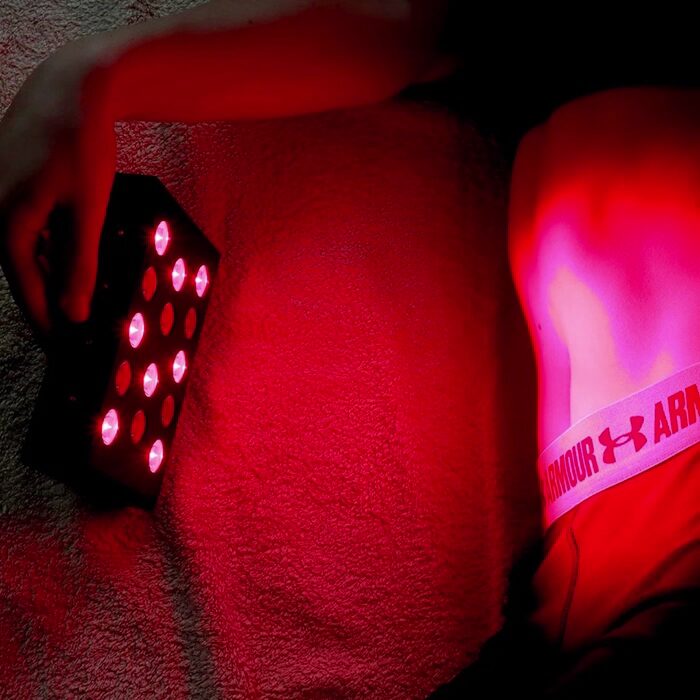
Bottom line: A growing body of clinical research suggests that red light therapy—also called photobiomodulation (PBM) or low-level laser therapy (LLLT)—can be an effective, non-invasive treatment for reducing pain and improving quality of life in people with fibromyalgia. Several randomized controlled trials and a meta-analysis have reported statistically significant benefits, though optimal treatment protocols continue to be refined.
Understanding Fibromyalgia
Fibromyalgia is a chronic condition characterized by widespread musculoskeletal pain, fatigue, sleep disturbances, and emotional distress. According to the CDC, it affects approximately 4 million U.S. adults, or about 2% of the population, with women diagnosed at roughly twice the rate of men.
The condition is thought to involve abnormal pain perception processing, meaning people with fibromyalgia may be more sensitive to pain than those without it. Diagnosis typically involves a physical examination, review of health history, and ruling out other conditions through blood work and imaging.
Current treatment approaches often combine medication, aerobic exercise, stress management techniques, and cognitive behavioral therapy. However, many patients seek additional non-pharmacological options, which is where red light therapy has garnered increasing attention.
What Is Red Light Therapy?
Red light therapy (RLT) uses low-wavelength light—typically in the red (620–700 nm) and near-infrared (700–1100 nm) spectrum—to penetrate skin and underlying tissues. Unlike lasers that ablate or cut, this therapy delivers non-ionizing, low-dose light energy that interacts with cellular components without generating heat damage.
The therapy is also referred to as photobiomodulation (PBM) or low-level laser therapy (LLLT) when coherent laser light is used. The proposed mechanism involves stimulation of mitochondrial function, particularly through interaction with cytochrome c oxidase, which may enhance cellular energy production (ATP), modulate inflammation, and promote tissue repair.
The Clinical Evidence: What Research Shows
Systematic Review and Meta-Analysis
The most comprehensive evidence to date comes from a 2019 systematic review and meta-analysis published in Pain Physician. Researchers analyzed 9 randomized controlled trials involving 325 fibromyalgia patients who received either active LLLT or placebo laser treatment.
The results were statistically significant across multiple outcome measures:
| Outcome Measure | Standardized Mean Difference (SMD) | 95% Confidence Interval |
|---|---|---|
| Fibromyalgia Impact Questionnaire (FIQ) | 1.16 | 0.64–1.69 |
| Pain Severity | 1.18 | 0.82–1.54 |
| Number of Tender Points | 1.01 | 0.49–1.52 |
| Fatigue | 1.40 | 0.96–1.84 |
| Stiffness | 0.92 | 0.36–1.48 |
| Depression | 1.46 | 0.93–2.00 |
| Anxiety | 1.46 | 0.45–2.47 |
Key finding: Patients receiving LLLT demonstrated significantly greater improvement than those receiving placebo laser across every measured domain. The authors concluded that “LLLT is an effective, safe, and well-tolerated treatment for fibromyalgia”.
Notably, the meta-analysis also found that when LLLT was combined with exercise therapy, it provided additional benefits in reducing pain severity, tender point count, and fatigue compared to exercise alone.
Randomized Controlled Trials
Whole-Body Photobiomodulation (2024)
A triple-blinded randomized clinical trial published in Frontiers in Neuroscience evaluated whole-body PBM in 42 fibromyalgia patients. Participants underwent 12 treatment sessions over 4 weeks.
Results showed significant reductions in pain at the end of treatment, at 2-week follow-up, and at 6-month follow-up. Quality of life improvements were observed at multiple assessment points, and kinesiophobia (fear of movement) and self-efficacy also improved. The authors concluded that whole-body PBM “emerges as a promising multifactorial treatment option for FM patients”.
PBM Combined with Static Magnetic Field (2023)
A randomized placebo-controlled trial published in European Journal of Physical and Rehabilitation Medicine examined PBM combined with a static magnetic field (PBMT-sMF) in 90 female fibromyalgia patients. Participants received nine treatment sessions over 3 weeks.
The PBMT-sMF group showed a significant decrease in tender point count compared to placebo at both end-of-treatment (p<0.0001) and 4-week follow-up (p<0.0001). No adverse events were reported. The authors stated that “PBMT-sMF is superior to placebo, supporting its use in patients with fibromyalgia”.
PBM Combined with Aerobic Exercise (2024)
A double-blinded RCT published in Lasers in Medical Science evaluated PBM alongside aerobic exercise in 51 women with fibromyalgia. All treatment groups—including PBM alone, exercise alone, and combined therapy—showed significant intragroup improvements in pain and quality of life.
Interestingly, this study found no significant differences between groups, suggesting that both exercise and PBM independently produce benefits. The authors recommended further research with different PBM parameters to optimize protocols.
PBM and Circadian Blood Pressure (2022)
A triple-blinded RCT published in Biomedicines examined whole-body PBM effects on circadian blood pressure variation, pain pressure thresholds, and tissue elasticity. The study found significant differences in blood pressure circadian variation (p=0.036) and improvements in pain pressure thresholds at multiple tender points, including the occiput, low cervical, trapezius, second rib, and medial epicondyle.
Comparison of Treatment Approaches for Fibromyalgia
How Does Red Light Therapy Work for Fibromyalgia?
While the exact mechanisms remain under investigation, several proposed pathways may explain the observed benefits:
- Mitochondrial stimulation: Red and near-infrared light may enhance ATP production in cells, improving energy metabolism in affected tissues.
- Anti-inflammatory effects: PBM has been shown to modulate inflammatory mediators, potentially reducing neuroinflammation associated with fibromyalgia.
- Improved microcirculation: Therapy may enhance local blood flow, supporting tissue oxygenation and healing.
- Neuromodulation: Light energy may influence nerve function and pain signaling pathways, contributing to reduced pain perception.
Practical Considerations for Patients
Treatment Parameters
Clinical studies have used varying parameters, including:
- Wavelengths: Typically 640–880 nm (red to near-infrared)
- Doses: Ranging from 20 J to 40 J per treatment session in one 2024 study
- Treatment frequency: 2–3 times per week for 3–12 weeks
- Application: Localized to tender points or whole-body panels
FDA Clearance Status
It is important to distinguish between FDA clearance for specific indications and clinical evidence for fibromyalgia. Several red light therapy devices have received FDA 510(k) clearance for “temporary relief of minor muscle and joint pain, arthritis and muscle spasm” and related indications. However, fibromyalgia is not specifically listed as a cleared indication for any device.
This means that while clinical evidence supports use for fibromyalgia-related pain, manufacturers cannot legally claim FDA approval specifically for fibromyalgia treatment.
Safety Profile
Across all reviewed studies, adverse events were minimal or absent. PBM is generally well-tolerated, with no reports of serious side effects in the fibromyalgia trials. This favorable safety profile makes it an attractive adjunctive option for patients seeking non-pharmacological approaches.
Expert Perspectives
The authors of the 2019 meta-analysis concluded definitively: “LLLT is an effective, safe, and well-tolerated treatment for fibromyalgia”.
The 2024 whole-body PBM trial authors stated that their findings “indicate that whole-body PBM treatment for 4 weeks resulted in significant pain reduction and improved quality of life in individuals suffering from FM”.
The 2023 PBMT-sMF trial investigators wrote that the therapy “might be considered an important adjuvant to the treatment regimens of patients with fibromyalgia”.
Conclusion
The available clinical evidence supports red light therapy as a beneficial adjunctive treatment for fibromyalgia. The 2019 meta-analysis provides the strongest single source of evidence, demonstrating significant improvements across pain, function, fatigue, stiffness, and psychological outcomes. Subsequent randomized controlled trials have reinforced these findings, with some showing benefits persisting for up to six months.
That said, important questions remain regarding optimal treatment parameters (wavelength, dose, duration, and application method). The 2024 study that found no differences between PBM and exercise groups highlights the need for standardized protocols that can reliably outperform active controls.
For patients considering red light therapy, it represents a low-risk, non-invasive option with demonstrated benefits in clinical research. As with any treatment for fibromyalgia, a comprehensive approach combining multiple evidence-based strategies—including exercise, stress management, and appropriate medical care—remains the most prudent path forward.
References
- Yeh SW, Hong CH, Shih MC, et al. Low-Level Laser Therapy for Fibromyalgia: A Systematic Review and Meta-Analysis. Pain Physician. 2019;22(3):241-254.
- Vassão PG, et al. Effects of photobiomodulation and an aerobic exercise on the level of pain and quality of life in women with fibromyalgia. Lasers Med Sci. 2024;39(1):189.
- Navarro-Ledesma S, et al. Outcomes of whole-body photobiomodulation on pain, quality of life… Front Neurosci. 2024;18:1264821.
- Ribeiro NF, et al. Photobiomodulation therapy combined with static magnetic field is better than placebo in patients with fibromyalgia. Eur J Phys Rehabil Med. 2023;59(6):754-762.
- Navarro-Ledesma S, et al. Changes in Circadian Variations in Blood Pressure… after Whole-Body Photobiomodulation. Biomedicines. 2022;10(11):2678.
- Centers for Disease Control and Prevention. Fibromyalgia