 Free Shipping
  Buy Now, Pay Later
  Eligible

Does Red Light Therapy Help with Papillomas in Dogs? A Veterinary Evidence Review

Bottom line: There is currently no direct clinical evidence supporting the use of red light therapy (photobiomodulation) as a primary treatment for canine papillomas. While red light therapy is a well-established veterinary modality for inflammation, pain, and wound healing, its role in treating viral papillomatosis remains speculative and unproven in peer-reviewed literature.
Understanding Canine Papillomas
Papillomas (warts) in dogs are benign skin and mucosal tumors caused by papillomaviruses. Canine papillomavirus types 1, 2, 6, and 7 are most commonly associated with these lesions . Oral papillomatosis is most frequent in young dogs under one year of age, while cutaneous papillomas can affect dogs of various ages .
The critical clinical fact: most canine papillomas resolve spontaneously. Oral papillomas typically regress within 6 to 12 weeks as the dog’s immune system mounts an effective response, with complete resolution taking up to a year in some cases . This self-limiting nature makes it difficult to evaluate any treatment’s true efficacy—improvement may simply reflect natural disease course .
What Red Light Therapy Actually Does
Red light therapy, clinically termed photobiomodulation (PBM) or low-level laser therapy (LLLT), uses red and near-infrared light to produce photochemical effects in tissues. The mechanism involves light absorption by mitochondrial respiratory chain components, stimulating ATP generation and modulating gene expression related to tissue repair, inflammation, and pain .
Veterinary applications with documented support include:
- Acute and chronic musculoskeletal disorders
- Post-operative and traumatic wound healing
- Dermatitis and otitis
- Dental and oral inflammatory conditions
Notably, viral infections are not listed among established indications. The proposed mechanisms—anti-inflammatory, analgesic, and tissue repair effects—do not directly target viral replication or the immune response specific to papillomavirus clearance.
Comparison of Treatment Approaches for Canine Papillomas
| Treatment | Evidence Level | Mechanism | Typical Use Case | Key Limitations |
|---|---|---|---|---|
| Watchful waiting | Strong (natural history studies) | Immune-mediated regression | Most cases, especially young dogs with few lesions | Takes weeks to months; owner anxiety |
| Surgical excision/debulking | Moderate (clinical experience) | Physical removal | Large or obstructive lesions | May stimulate regression; recurrence possible; invasive |
| Azithromycin | Moderate (clinical reports) | Immunomodulation | Severe oral papillomatosis | Off-label use; GI side effects |
| Cryotherapy/electrosurgery | Moderate (clinical experience) | Tissue destruction | Localized lesions | Requires anesthesia; scarring |
| Interferon-alpha | Limited (case reports) | Antiviral/immunomodulatory | Refractory cases | Cost; limited availability |
| Radiation therapy | Limited (case report) | DNA damage to rapidly dividing cells | Refractory papillomatosis with malignant transformation | Specialized equipment; significant side effects (mucositis) |
| Red light therapy | Insufficient/None | Photobiomodulation of inflammation and repair | Not established for papillomas | No direct evidence; may not address viral etiology |
Why Red Light Therapy Is Unlikely to Be a Primary Solution
The pathophysiology of papillomavirus infection involves viral entry into basal epithelial cells, expression of viral genes that drive cellular proliferation, and evasion of host immune detection . Red light therapy’s established mechanisms do not include direct antiviral activity or specific enhancement of antiviral immunity.
For regression to occur, the dog must develop an effective cell-mediated immune response against papillomavirus antigens . Whether photobiomodulation can accelerate or enhance this specific immune process has not been investigated in any published study identified in this review. The veterinary photobiomodulation literature focuses on inflammation, pain, and repair—not viral clearance .
Dr. Christopher Winkler, editor of Laser Therapy in Veterinary Medicine: Photobiomodulation, and colleagues emphasize that photobiomodulation is not a panacea and requires condition-specific evidence for appropriate application . Applying it to viral papillomas without such evidence risks delaying effective treatment or giving owners false expectations.
When Red Light Therapy Might Be Considered
There is one scenario where red light therapy could be adjunctively justified: if papillomas cause secondary inflammation, pain, or ulceration, photobiomodulation may provide symptomatic relief for those complications. However, this would be palliative—not curative—for the underlying viral infection.
Veterinary practitioners should be transparent with owners: red light therapy will not eliminate papillomas through any documented mechanism, and its use as a primary treatment is not supported by current evidence.
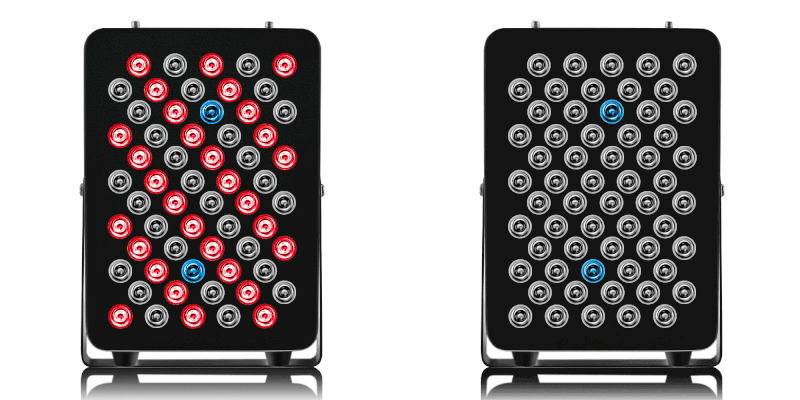
VELLGUS Elite V2
THE #1 RATED RED LIGHT DEVICE
Vellgus Red Light Elite V2 is an incredible way to experience the benefits of multiwave technology spectrum: 480nm 630nm, 660nm, 810nm, 830nm, 850nm. No other red/NIR light device available provides the multi-wave R+| NIR+ spectral output.
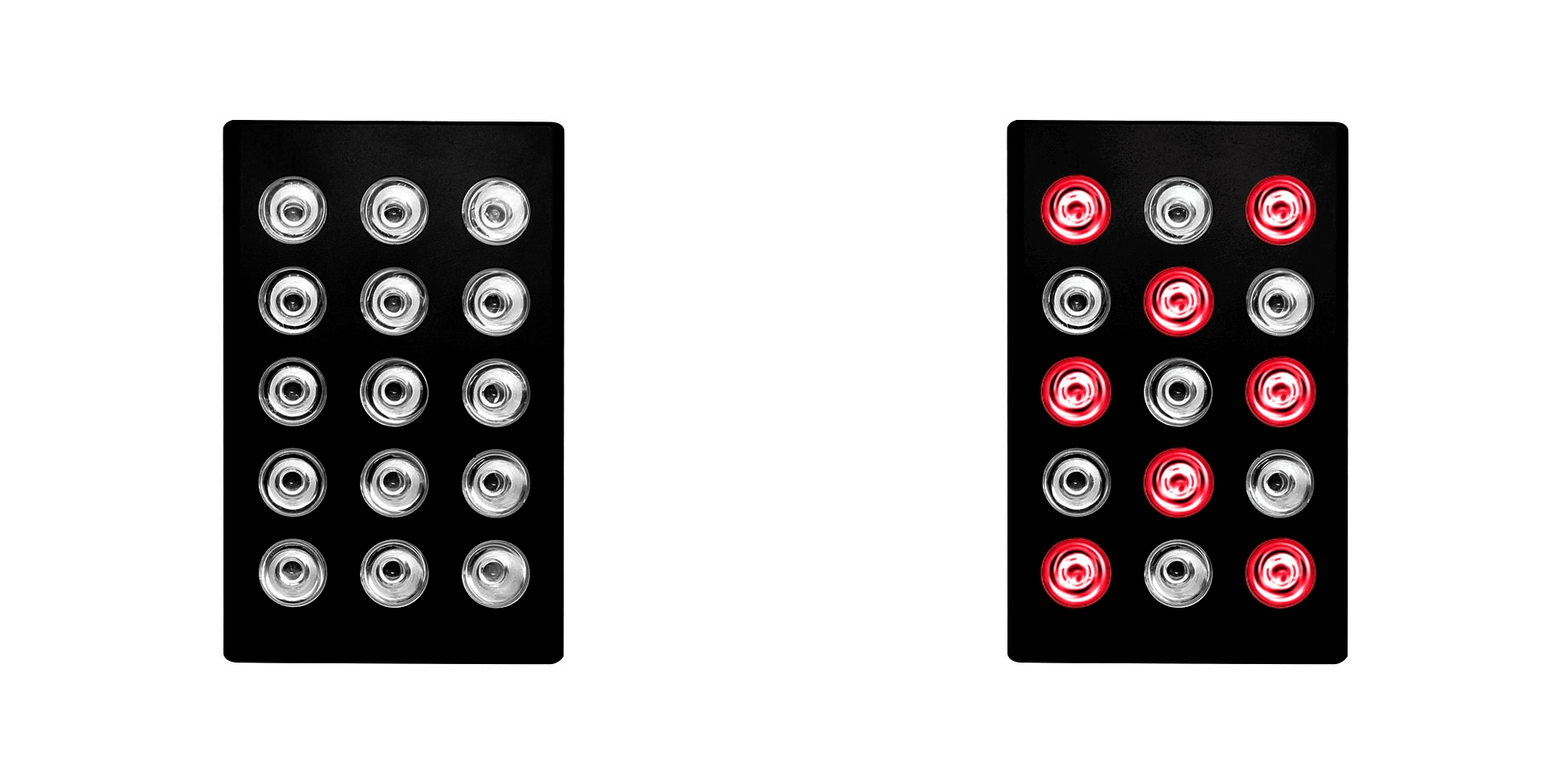
VELLGUS mini
THE #1 RATED FULL BODY RED LIGHT DEVICE
The Vellgus red light mini is the ultimate combination of power and portability. Its low EMF, no flicker dual NIR and red-Light therapy device offers the perfect blend of near infrared light at 850nm and red light at 660nm in one package.
What Veterinarians Should Recommend
Based on current evidence, the appropriate approach is:
- Confirm diagnosis via histopathology, especially for atypical or persistent lesions
- Assess for spontaneous regression—most cases require no treatment
- Treat only when indicated (obstruction, severe discomfort, persistent lesions beyond 3 months)
- Use evidence-based options first: surgical debulking, azithromycin, cryotherapy, or interferon for refractory cases
- Reserve red light therapy for symptomatic management of associated inflammation if needed—not as primary antiviral therapy
The MSD Veterinary Manual, authored by Dr. Brenda Mulherin (DVM, DAVDC) and peer-reviewed by Dr. Joyce Carnevale (DVM, DABVP), explicitly states that the self-limiting nature of papillomatosis makes evaluation of any treatment difficult and that treatment is frequently unnecessary .
Conclusion
Red light therapy has legitimate veterinary applications, but canine papillomas are not among them based on current evidence. The absence of published clinical trials, the lack of a plausible antiviral mechanism, and the high rate of spontaneous regression together argue against its use as a primary treatment. Veterinarians should prioritize evidence-based approaches and maintain honest communication with owners about what photobiomodulation can—and cannot—do.