 Free Shipping
  Buy Now, Pay Later
  Eligible

Red Light Therapy for Fascia Release: A Clinical Guide to Evidence, Protocols, and Realistic Expectations
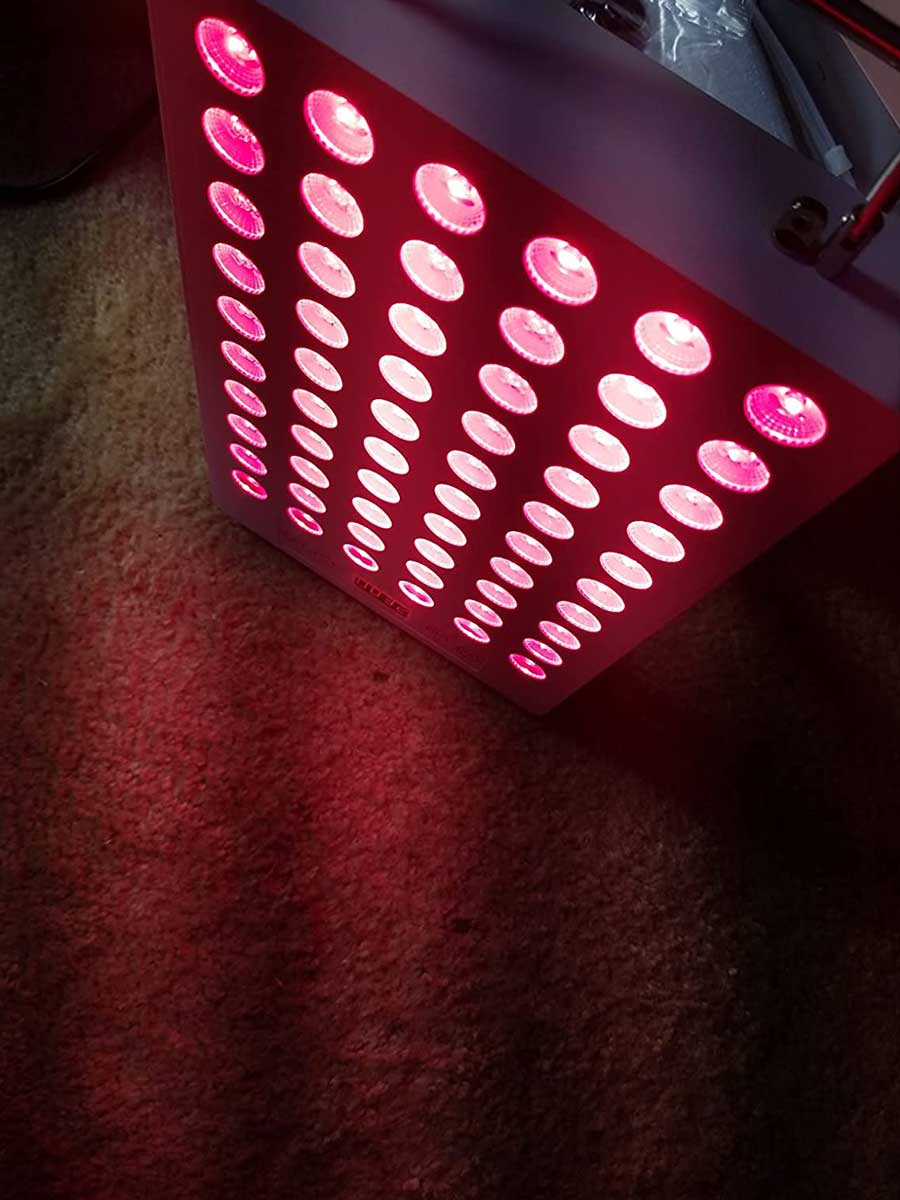
Bottom line: Red light therapy, when delivered at adequate near-infrared wavelengths and dosages, can support fascial healing through photobiomodulation—stimulating mitochondrial energy production, improving local circulation, and modulating inflammation. However, the evidence for fascia-specific outcomes (such as reducing fascial thickness or directly “releasing” adhesions) is limited. The strongest clinical support exists for pain reduction and functional improvement in conditions like plantar fasciitis, where the fascia is the primary pathology.
Understanding Fascia and Why It Matters
Fascia is a continuous web of dense connective tissue that surrounds muscles, bones, nerves, and organs. It transmits mechanical forces, provides structural support, and can become a source of pain when thickened, dehydrated, or adhered following injury or chronic overload.
Traditional “fascia release” techniques—manual therapy, foam rolling, instrument-assisted mobilization—aim to restore fascial glide and reduce tension. Red light therapy offers a different mechanism: rather than mechanically breaking down restrictions, it works at the cellular level to support tissue repair and reduce the inflammatory environment that contributes to fascial dysfunction.
How Photobiomodulation Affects Fascial Tissue
Photobiomodulation (PBM) is the scientific term for light therapy’s biological effects. When near-infrared light penetrates tissue, it is absorbed by cytochrome c oxidase in the mitochondria, triggering a cascade of cellular responses:
- Increased ATP production, providing energy for tissue repair
- Modulation of reactive oxygen species, reducing oxidative stress
- Improved local circulation, enhancing oxygen and nutrient delivery
- Anti-inflammatory effects, reducing edema and pain signaling
- Stimulation of collagen synthesis, supporting connective tissue remodeling
A 2023 animal study specifically examined the ultrastructure of myofascial trigger points after low-intensity red light exposure. Researchers found that photobiostimulation reduced destructively altered muscle fibers and stimulated mitochondrial respiration, indicating “intracellular regeneration and the stimulating effect of low-intensity red light on plastic processes”. This provides mechanistic support for PBM’s role in fascial tissue repair.
The Critical Distinction: Red Light vs. Near-Infrared
One of the most important practical considerations for fascia-focused treatment is wavelength selection. “Red light therapy” is often used as an umbrella term, but the distinction between red (630–660 nm) and near-infrared (NIR, 780–980 nm) wavelengths has significant clinical implications.
| Wavelength Range | Common Label | Penetration Depth | Best Targets |
|---|---|---|---|
| 630–660 nm | Red light | 2–5 mm | Skin, superficial myofascial layers, wound healing |
| 780–980 nm | Near-infrared (NIR) | 20–40 mm (or more) | Deeper fascia, tendons, joint capsules, muscle |
| 810–850 nm | NIR (clinical) | 20–40 mm | Plantar fascia, deep connective tissue |
A comprehensive 2026 review on LED-based PBM in musculoskeletal pain concluded that “red wavelengths around 630–660 nm are more appropriate for superficial targets, including superficial myofascial pain,” while “near-infrared wavelengths, commonly around 780–980 nm, may be preferable for moderately deeper targets such as tendons, joint capsules, periarticular tissues, and peripheral nerves”.
For most fascial applications—particularly the plantar fascia, iliotibial band, and deeper fascial layers—NIR wavelengths are essential. Devices offering only 630–660 nm red light will not deliver therapeutic photons to deeper fascial structures through the overlying skin, adipose tissue, and muscle.
Clinical Evidence for Fascia-Related Conditions
Plantar Fasciitis
Plantar fasciitis is the most studied fascia-related condition in photobiomodulation research. A 2026 meta-analysis published in the Journal of Clinical Medicine examined 13 randomized controlled trials with 784 participants. The analysis found that laser therapy showed a significant improvement in heel tenderness (SMD = -0.40; 95% CI -0.71 to -0.09), but no significant differences were observed in overall pain, function, or fascial thickness.
The authors concluded that laser therapy “may reduce heel tenderness in plantar fasciitis, but it does not consistently improve overall pain, function, or fascial thickness. Its use should be considered as a therapeutic adjunct and not as a primary intervention”.
This is an important finding: PBM does not appear to directly “release” or thin the fascia. Its benefits are more likely mediated through pain modulation and tissue repair stimulation rather than mechanical alteration of fascial structure.
Myofascial Pain and Trigger Points
The evidence for PBM in myofascial pain is somewhat stronger. A systematic review and meta-analysis on photobiomodulation for myofascial temporomandibular disorder found that “laser-treated groups had painful symptoms improvement that was superior to the control group” (mean difference 1.49; 95% CI = -1.67 to -1.32). The most commonly used wavelength was 780 nm, with typical protocols involving 4 treatments over 4 weeks or 10 sessions, often twice weekly.
A 2026 review specifically identified “temporomandibular disorders, fibromyalgia, cervical and myofascial pain, plantar fascia and tendon-related disorders” as conditions with “more consistent positive signals” in the LED-PBM literature.
What the Evidence Does Not Support
The current evidence does not support claims that red light therapy:
- Mechanically “breaks down” fascial adhesions
- Significantly reduces fascial thickness in chronic cases
- Replaces manual therapy or exercise-based rehabilitation
Clinical Protocols: What Parameters Matter
Effective PBM depends on delivering an adequate optical dose to the target tissue. The following parameters are derived from clinical studies and expert guidance:
Wavelength Selection
For plantar fascia and other deep fascial targets, 810–850 nm NIR is essential. A clinical resource on plantar fasciitis treatment states that “red light (630–660 nm) penetrates only 2–5 mm into tissue and will not reach the plantar fascia in most people. NIR at 810–850 nm penetrates 20–40 mm, sufficient to reach the fascial insertion”.
Dosage Parameters
| Parameter | Typical Range | Notes |
|---|---|---|
| Energy density | 4–12 J/cm² per treatment point | Higher doses (10+ J/cm²) for thicker tissue like heel pad |
| Power density | 30–100 mW/cm² (LED) | Higher power densities may be used with laser devices |
| Total energy per session | 2000–4000 J (clinical laser) | For comprehensive treatment of plantar fascia and calf |
| Treatment frequency | 2–5 sessions per week | Acute phase: more frequent; maintenance: 2–3x weekly |
| Treatment duration | 2–4 minutes per point (laser); 10–20 minutes (LED panel/wrap) | Depends on device irradiance |
A clinical case study on chronic plantar fasciitis used a Class IV laser with 810 nm (60%) + 980 nm (40%), 15W continuous wave, delivering 12 J/cm² to the calcaneal insertion, medial arch, and gastrocnemius/soleus. The protocol involved 2 sessions weekly for 4 weeks.
Treatment Sites for Plantar Fascia
Effective treatment addresses the entire kinetic chain, not just the pain point:
- Medial calcaneal tubercle (primary insertion point)
- Central heel
- Proximal and mid-arch along the medial band
- Gastrocnemius/soleus (calf tightness contributes to fascial tension)
Treatment Timeline Expectations
| Timeframe | Expected Response |
|---|---|
| Weeks 1–2 | Some acute pain relief during and after sessions |
| Weeks 3–6 | Gradual reduction in morning/first-step pain |
| Weeks 6–12 | Structural improvement if responding; reduced tenderness |
| 12+ weeks | Maximum benefit; transition to maintenance |
Patients with acute conditions (less than 6 months) generally respond better than those with chronic degenerative changes.
Combining Red Light Therapy with Other Interventions
The evidence consistently positions PBM as an adjunct, not a standalone treatment. The 2026 meta-analysis explicitly states that laser therapy “should be considered as a therapeutic adjunct and not as a primary intervention”.
Effective fascia-focused rehabilitation combines:
- PBM to modulate inflammation and support tissue repair
- Eccentric loading exercises to stimulate collagen remodeling and fascial strength
- Manual therapy to address mechanical restrictions
- Load management to reduce repetitive strain
One clinical protocol describes a phased rehabilitation approach where PBM is integrated with progressive exercise: Phase 1 focuses on pain reduction with gentle stretches and daily PBM; Phase 2 adds eccentric calf drops and intrinsic foot strengthening; Phase 3 progresses to functional loading; and Phase 4 prepares for return to activity.
Device Selection: Laser vs. LED
| Feature | Clinical Laser (Class III/IV) | LED Panel/Wrap |
|---|---|---|
| Power output | Higher (up to 15W+ for Class IV) | Lower (typically <1W per LED) |
| Treatment time | Shorter (minutes per point) | Longer (10–20 minutes) |
| Penetration | Deeper with higher power | Adequate for most NIR applications |
| Cost | Higher; typically clinic-based | Lower; home-use feasible |
| Best for | Deep, focal targets; recalcitrant cases | Home maintenance; broader coverage |
A 2026 review cautioned that “laser and LED studies should not be pooled or compared indiscriminately unless dosimetric equivalence is plausible and transparently documented”. The key variable is not the emitter type but the delivered optical dose at the target tissue.
Safety and Regulatory Status
Red light therapy is generally well-tolerated with a favorable safety profile. The FDA has cleared certain LED devices for “temporary relief of minor muscle and joint pain, arthritis and muscle spasm; relieving stiffness; promoting the relaxation of muscle tissue; and to temporarily increase local blood circulation”.
Adverse effects are rare but may include transient redness, warmth, or mild discomfort at the treatment site. Contraindications include application over active cancer sites, photosensitivity disorders, and pregnancy (abdominal application).
MD Anderson Cancer Center notes that red light therapy is “still in the investigational stages for pain management” and that “there are not randomized control studies that outline how often or for how long a patient needs to get this therapy”. This underscores the need for individualized protocols and realistic expectations.
Practical Recommendations
For clinicians:
- Use NIR wavelengths (810–850 nm) for any fascial target deeper than superficial myofascial layers
- Document dosimetry precisely: wavelength, power density, energy density, treatment time, and treatment area
- Position PBM as part of a multimodal rehabilitation program, not a replacement for exercise or load management
- Set realistic expectations: fascial changes take weeks to months, not days
For patients considering home devices:
- Look for devices with NIR (810–850 nm) capability, not just 630–660 nm red light
- Ensure sufficient irradiance at the treatment distance to deliver therapeutic doses in a practical timeframe
- Use consistently (daily or near-daily during acute phases) and allow 12 weeks before assessing effectiveness
- Continue prescribed exercises and load management strategies
Summary
Red light therapy—specifically near-infrared photobiomodulation—can support fascial healing through cellular mechanisms that promote tissue repair, reduce inflammation, and modulate pain. The strongest evidence is for pain reduction in conditions like plantar fasciitis, where PBM serves as a useful adjunct to exercise and load management. However, it does not appear to directly “release” or mechanically alter fascial structure. The evidence for fascial thickness reduction is not supportive.
For best results, match the wavelength to the target depth, deliver an adequate optical dose, and integrate PBM into a comprehensive rehabilitation program rather than relying on light alone.