 Free Shipping
 Buy Now, Pay Later
 Eligible

Red Light Therapy for Presbyopia: What the New Clinical Evidence Actually Shows
Presbyopia affects nearly everyone over 40, yet treatment options remain largely compensatory—glasses, contacts, or surgery—rather than restorative. A 2026 randomized controlled trial from Hong Kong Polytechnic University is now testing whether repeated low-level red light therapy (RLRL) can change that calculus by improving accommodative function and reducing the eye strain that makes presbyopia so frustrating day to day.
If you are researching red light therapy for presbyopia, you have likely encountered a fog of marketing claims and extrapolated data from myopia studies. This article separates the signal from the noise. We will examine the specific clinical trial data on presbyopia, compare red light therapy against conventional management, and address the safety questions that any responsible clinician would raise.
The Biological Rationale: Why Red Light for an Aging Eye?
Presbyopia is not merely a mechanical stiffening of the lens. While lenticular sclerosis is the primary driver, the aging eye also exhibits measurable declines in subfoveal choroidal thickness and choroidal blood flow . Sustained near work—the very task that becomes difficult with presbyopia—is associated with further choroidal thinning and reduced perfusion, creating a cycle of accommodative strain and asthenopic symptoms (eye strain, fatigue, headache) .
Repeated low-level red light therapy, typically delivered at wavelengths around 650–670 nm, has been shown in pediatric myopia trials to safely thicken the choroid and increase chorioretinal blood flow . The hypothesis tested in the presbyopia trial was straightforward: if RLRL improves ocular microcirculation, it might alleviate the metabolic burden of sustained accommodation and improve the functional performance of the aging accommodative apparatus.
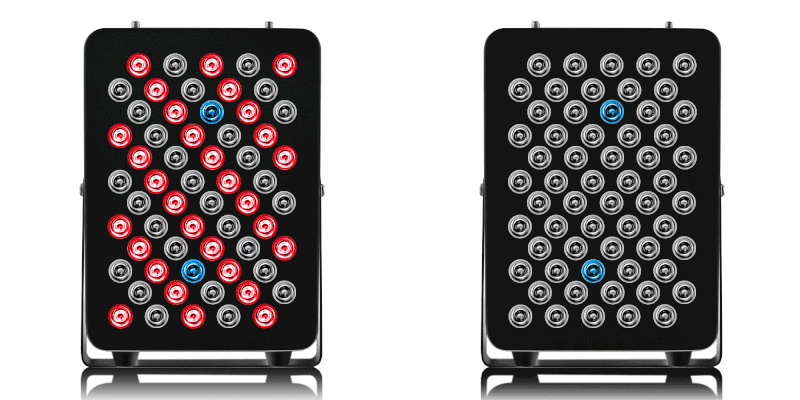
VELLGUS Elite V2
THE #1 RATED RED LIGHT DEVICE
Vellgus Red Light Elite V2 is an incredible way to experience the benefits of multiwave technology spectrum: 480nm 630nm, 660nm, 810nm, 830nm, 850nm. No other red/NIR light device available provides the multi-wave R+| NIR+ spectral output.
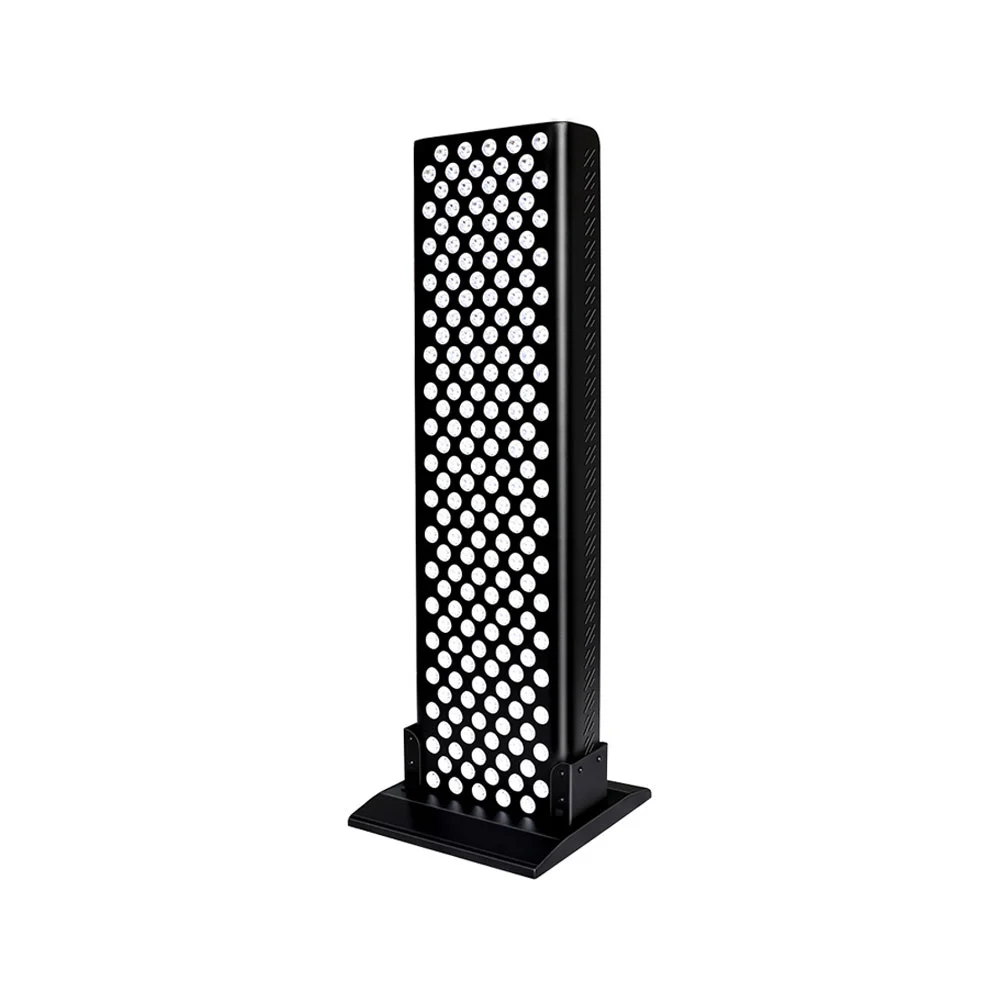
VELLGUS max 300
THE #1 RATED FULL BODY RED LIGHT DEVICE
Upgrade your red light therapy experience and take it to the next level with VELLGUS Red Light Max 300. This device is specifically designed for those wanting a brighter and more intense red light treatment
The Evidence: The 2026 Hong Kong PolyU Randomized Controlled Trial
The most rigorous data on RLRL for presbyopia comes from a double-masked, randomized, parallel-arm trial conducted at The Hong Kong Polytechnic University, published in Annals of Medicine in 2026 . This is not a manufacturer-funded case series; it is a registered clinical trial (NCT06745661) with independent outcome assessors and statisticians blinded to allocation .
Study Design at a Glance
| Parameter | Detail |
|---|---|
| Population | Adults >40 years with presbyopia and self-reported asthenopia |
| Intervention | RLRL at 650 nm, 0.29 mW through a 4-mm pupil, 3 min twice daily |
| Control | Sham device at 10% of active power |
| Duration | 31 days |
| Primary Outcomes | Asthenopic symptoms (CVS-Q, NAVQ), accommodative amplitude |
| Masking | Double-masked (participants, examiners, statisticians) |
Key Findings: What Improved and By How Much
The results were statistically significant and clinically meaningful for symptom burden, though the mechanism appears to be vascular and functional rather than a reversal of lens stiffening.
Asthenopic Symptoms: The RLRL group demonstrated a significantly greater reduction in symptoms compared to sham. In the intention-to-treat analysis, the adjusted between-group difference in symptom score change at day 31 was −1.75 (95% CI, −3.10 to −0.39; p = 0.011), favoring RLRL .
Accommodative Amplitude: This is the most intriguing finding. Binocular accommodative amplitude improved by an adjusted mean of 1.29 D in the RLRL group versus 0.19 D in the sham group, yielding a between-group difference of 1.09 D (95% CI, 0.37 to 1.82; p = 0.003) . A subgroup analysis revealed that the effect was concentrated in participants with higher baseline residual accommodation (>2.0 D), where the between-group difference reached 1.32 D . In practical terms, this suggests RLRL may help those with early-to-moderate presbyopia squeeze more functional range out of their remaining accommodative system, but it is unlikely to restore reading vision to a 55-year-old with advanced lenticular rigidity.
What Did Not Change: Other accommodative parameters—binocular accommodative facility, negative relative accommodation, and the AC/A ratio—showed no significant between-group differences . This specificity matters: it suggests the therapy is not globally “stimulating” the eye but may be acting on the vascular/metabolic constraints of sustained accommodation.
Comparison: Red Light Therapy vs. Conventional Presbyopia Management
The table below contextualizes RLRL against established options. Note that RLRL is not a replacement for optical correction; it is being investigated as an adjunct for symptom relief and functional support.
Clinical Bottom Line: RLRL is the only modality in this table being studied as a non-invasive, non-optical intervention that might improve the eye’s own functional capacity. It does not compete with glasses for immediate vision correction; it competes with “doing nothing” about the strain and fatigue that accompany presbyopia.
Safety and the Critical Caveat: Device Matters
Any credible discussion of red light therapy must include the safety warnings that have emerged from the myopia literature, because the same devices and wavelengths are involved.
A 2026 structured review in Photodiagnosis and Photodynamic Therapy concluded that while clinical trial safety findings for RLRL are “generally reassuring,” there are isolated reports of retinal injury, transient OCT abnormalities, and cone-density changes . The authors emphasized that safety cannot be generalized across all red-light devices; RLRL should be interpreted as a device-dependent intervention requiring independent radiometric validation .
The American Academy of Ophthalmology has also cautioned that unregulated red light devices sold online raise concerns, and that red light therapy has not been FDA-approved for ocular use in the United States . Dr. Laura Enyedi, a pediatric ophthalmologist at Duke Eye Center, noted in an AAO review that “there simply is not enough information to assess the safety of red light therapy, and the devices available in the US are not regulated and could damage your retina” .
What this means for a consumer or clinician considering RLRL for presbyopia: The Hong Kong trial used a specific device with defined dosimetry (650 nm, 0.29 mW through a 4-mm pupil, 3 minutes twice daily). Purchasing a generic “red light eye device” from an online marketplace and assuming equivalence is not supported by the evidence. If you pursue RLRL, it should be under the supervision of an eye care professional who can verify the device parameters and monitor your retina.
Frequently Asked Questions
1. Can red light therapy cure presbyopia or eliminate the need for reading glasses?
No. The 2026 RCT showed improvements in accommodative amplitude and symptom scores, but the average gain was approximately 1.1 diopters—meaningful for comfort and early presbyopia, but not a restoration of youthful accommodation . Presbyopia is driven by progressive lenticular sclerosis; red light therapy does not reverse structural changes in the lens. It may reduce the strain of near work and help you use your remaining accommodation more comfortably, but it is not a substitute for optical correction when you need clear near vision.
2. How long does it take to see results, and how often do you need to use it?
In the Hong Kong trial, participants used the device for 3 minutes twice daily and were assessed at 15 and 31 days. Significant between-group differences in symptoms and accommodative amplitude emerged at the 31-day endpoint . There is no data yet on what happens after stopping treatment, or whether benefits persist with less frequent maintenance use. The study protocol required a minimum of 4 hours between sessions, 7 days per week .
3. Is red light therapy for the eyes safe?
The short-term safety profile in the presbyopia RCT was acceptable, with no severe adverse events reported in the published outcomes. However, the broader literature includes case reports of retinal injury and OCT abnormalities with some devices . The critical variable is device quality and dosimetry. A device that delivers excessive irradiance, uses incorrect wavelengths, or lacks thermal management could pose risks that the clinical trial device does not. The AAO explicitly warns against unregulated online devices . If you have a history of retinal disease, macular degeneration, or photosensitivity, you should not use RLRL without explicit clearance from a retinal specialist.
4. How does red light therapy for presbyopia differ from the red light therapy used for myopia in children?
The wavelength and delivery parameters are similar (typically 650–670 nm, low power through a dilated or fixed pupil), and the proposed mechanism—choroidal thickening and improved perfusion—is shared . The difference is the therapeutic goal. In myopia, the aim is to slow axial elongation. In presbyopia, the aim is to improve accommodative function and reduce asthenopic symptoms in an eye that is no longer growing. The presbyopia trial specifically excluded participants with a history of light therapy in the prior 6 months and those with conditions that could confound symptom reporting .
5. Can I just buy a red light device online and try it myself?
You can, but the evidence does not support assuming that any “red light” product will replicate the trial results, and the safety risks are real. The Hong Kong trial device was calibrated to deliver 0.29 mW through a 4-mm pupil—a specific dosimetry that a generic device may exceed or fall short of . The AAO’s review of the myopia literature noted that researchers warned physicians to treat red light therapy with caution until safety standards are confirmed . A reasonable middle path: if you are intrigued by the presbyopia data, discuss it with your optometrist or ophthalmologist. Ask whether they are familiar with the PolyU trial, whether they can verify device parameters, and whether your retinal health makes you a suitable candidate for any form of ocular photobiomodulation.
Summary: Red light therapy for presbyopia is no longer purely speculative—there is now a double-masked RCT showing statistically significant improvements in asthenopic symptoms and accommodative amplitude over one month. But the effect size is modest, the duration of benefit is unknown, and the safety landscape requires device-specific vigilance. It is a promising adjunct for the symptomatic presbyope, not a cure, and not a substitute for professional oversight.