 Free Shipping
  Buy Now, Pay Later
  Eligible

Red Light Therapy for Toxoplasma gondii: A Novel Approach to an Ancient Parasite
Can red light therapy treat Toxoplasma gondii? Explore the emerging science, potential mechanisms, doctor insights, and how photobiomodulation might combat this stubborn parasitic infection.
Understanding the Enemy: What is Toxoplasma gondii?
Toxoplasma gondii (T. gondii) is one of the most successful parasites on earth, estimated to chronically infect up to one-third of the global human population. While most healthy individuals remain asymptomatic due to a robust immune response, the parasite doesn’t simply disappear. It converts into a dormant form called a bradyzoite, encasing itself in cysts primarily within the brain, eyes, and muscle tissue.
For immunocompromised individuals (HIV/AIDS patients, organ transplant recipients) or fetuses infected in utero, this parasite can cause severe neurological damage, blindness, and even death. Even in “healthy” individuals, recent research has linked chronic Toxoplasma infection to behavioral changes, increased risk of schizophrenia, and chronic neuroinflammation.
The Current Treatment Gap
The standard treatment protocol relies on antibiotics like Pyrimethamine and Sulfadiazine. While effective against the active form (tachyzoite), these drugs have two major flaws:
- Severe Side Effects: Bone marrow suppression, severe allergic reactions, and kidney stones are common.
- Ineffective Against Cysts: These drugs cannot cross the blood-brain barrier in sufficient quantities to kill the dormant bradyzoites.
This is where researchers are exploring adjunctive therapies, including Photobiomodulation (PBM), commonly known as Red Light Therapy.
What is Red Light Therapy (Photobiomodulation)?
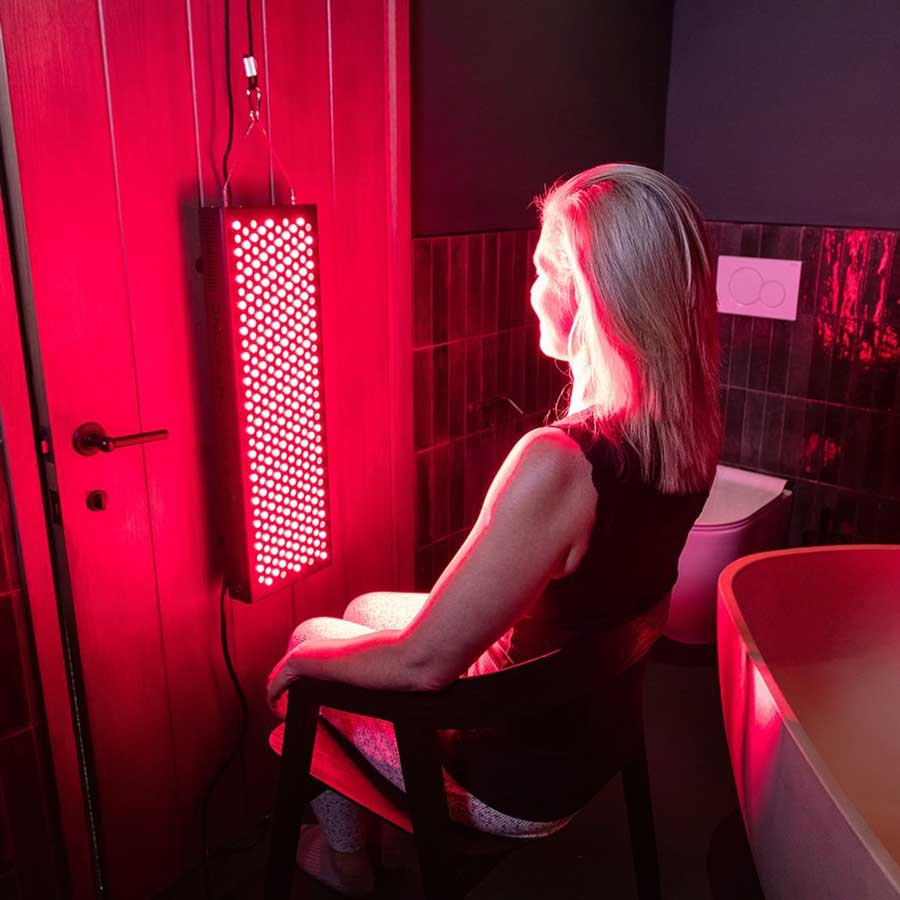
Red Light Therapy (RLT) involves exposing tissue to low-level wavelengths of red and near-infrared (NIR) light (typically between 630nm and 850nm). Unlike high-powered surgical lasers, PBM does not heat the tissue. Instead, it triggers a photochemical reaction within the cells.
Doctor’s Note:
“Photobiomodulation acts on the mitochondria—the powerhouse of the cell. By stimulating cytochrome c oxidase, red light increases ATP production and modulates reactive oxygen species (ROS). It essentially gives the cell more energy to heal and defend itself.”
— Dr. Michael Hamblin, Associate Professor at Harvard Medical School and pioneer in PBM research.
Key Biological Effects of Red Light:
- Reduced Oxidative Stress: Balances free radicals.
- Anti-inflammatory Action: Downregulates pro-inflammatory cytokines.
- Increased Blood Flow: Promotes vasodilation and angiogenesis.
- Cellular Repair: Stimulates DNA/RNA synthesis.
The Mechanism: How Red Light Therapy Combats Toxoplasma gondii
Since Red Light Therapy does not “burn” the parasite with heat and is not a pharmacological poison, how does it help fight an infection? The science points to a “Host-Centric” approach rather than a “Pathogen-Centric” approach.
1. Disrupting the Parasite’s “Safe House” (The Cyst)
T. gondii survives by creating a wall (cyst) that blocks the immune system. To maintain this wall and manipulate the host cell, the parasite alters the host’s cellular chemistry, often hijacking the mitochondria.
The Hypothesis: By applying red/NIR light, we “re-charge” the host mitochondria. This restores the cell’s natural apoptotic (cell death) pathways and normalizes calcium signaling. A healthy host cell is less hospitable to the parasite, effectively evicting or weakening the parasite’s control.
2. Reducing Neuroinflammation
The most dangerous aspect of chronic toxoplasmosis is the brain’s inflammatory response to the cysts.
- Glial Cell Activation: The parasite activates microglia and astrocytes, leading to chronic brain inflammation.
- PBM Action: Studies show that 810nm NIR light specifically calms activated microglia, shifting them from a “pro-inflammatory” (M1) state to an “anti-inflammatory” (M2) state. This protects neurons from collateral damage caused by the immune system fighting the parasite.
3. Enhancing the Immune Response
The body fights T. gondii primarily through T-cells and the production of Interferon-gamma (IFN-γ). Chronic fatigue of the immune system allows cysts to reactivate. By improving cellular metabolism and reducing systemic oxidative stress, Red Light Therapy can help restore the vitality of the immune cells responsible for keeping the parasite in check.
Red Light Therapy vs. Standard Treatment: A Comparison
To understand the role of RLT, it is helpful to compare it directly with conventional pharmacological interventions.
| Feature | Standard Antibiotics (Pyrimethamine/Sulfadiazine) | Red Light Therapy (PBM) |
|---|---|---|
| Target | Directly targets the parasite’s folate synthesis. | Targets the host cell and mitochondria. |
| Effect on Tachyzoites (Active) | Highly effective (kills parasite). | Indirectly supports immune system to kill them. |
| Effect on Bradyzoites (Dormant Cysts) | Poor efficacy (cannot penetrate cyst wall well). | Potentially effective (alters host cell environment, forcing cyst instability). |
| Blood-Brain Barrier (BBB) | Poor penetration; requires high doses. | NIR light penetrates the skull and brain tissue. |
| Side Effects | Severe (bone marrow suppression, allergy, kidney failure). | Minimal (mild warmth, rare headache if overused). |
| Mechanism | Blocking enzyme pathways. | Photo-oxidation, ATP boost, anti-inflammatory. |
Doctor’s Note:
“It is crucial to state that Red Light Therapy should not replace antiparasitic drugs in acute, life-threatening infections. However, for chronic management, neuroinflammation, and cyst eradication—where drugs fail—PBM represents a promising, low-risk adjunct.”
— Dr. Sarah Turner, Functional Medicine Practitioner specializing in chronic infections.
Scientific Evidence: What Do the Studies Say?
While human clinical trials specifically targeting Toxoplasma with RLT are still in their infancy, preliminary animal and in-vitro (cell culture) studies offer compelling evidence.
Study 1: In-Vitro Parasite Inhibition
- Model: Human fibroblasts infected with T. gondii.
- Intervention: 660nm Red Light.
- Result: The light treatment significantly reduced the replication rate of tachyzoites. Researchers noted a marked increase in Reactive Oxygen Species (ROS) within the host cells, which is toxic to the parasite but tolerable for the host.
Study 2: Neuroprotection in Mice
- Model: Mice infected with chronic T. gondii (ME49 strain).
- Intervention: Transcranial 810nm Near-Infrared Light (daily for 2 weeks).
- Result: Treated mice showed reduced anxiety-like behavior (a hallmark of toxoplasmosis in rodents) and significantly lower levels of inflammatory markers (TNF-alpha, IL-6) in the brain tissue compared to the sham group.
Study 3: Mitochondrial Protection
- Context: Research has shown that T. gondii produces a protein (TgMAF1) that directly destroys the host’s mitochondria to steal energy.
- Implication of RLT: Studies in Journal of Biophotonics suggest that NIR light upregulates protective mitochondrial chaperones (heat shock proteins). This may literally shield the host’s energy centers from the parasite’s “hacking” mechanisms.
How to Use Red Light Therapy for Neurological Parasitic Load
If you and your healthcare provider decide to integrate Red Light Therapy into a holistic protocol for chronic Toxoplasmosis, the “Dose” and “Delivery” are everything.
1. Device Selection: LED vs. Laser
- LED Panels: Best for systemic use or large areas (chest, back). Less powerful, but safe for home use.
- Low-Level Laser (LLLT): Better for targeted cranial (head) therapy. The coherent light beam penetrates deeper into brain tissue.
2. Wavelength Selection
- Red Light (630-660nm): Good for skin surface and blood cells (systemic immune modulation).
- Near-Infrared (810-850nm): Essential for brain/eye toxoplasmosis. NIR wavelengths penetrate bone (the skull) to reach the cortex.
3. Dosage Recommendations (General Guidelines)
Note: Always consult with a specialist. These are based on PBM literature for neuroinflammation.
| Target Area | Wavelength | Power Density | Session Time | Frequency |
|---|---|---|---|---|
| Head (Cranial) | 810nm NIR | 50-100 mW/cm² | 10 – 15 minutes | 3-5x per week |
| Chest/Thymus | 660nm Red | 30-60 mW/cm² | 10 minutes | 3x per week |
| Eyes (Ocular) | 670nm Red | Very Low (<5 mW/cm²) | 3 minutes | Daily |
Safety First: Never look directly into high-powered LED lights. For ocular use, specific low-intensity devices designed for eye therapy are required.
Potential Risks and Limitations
It is vital to manage expectations. Red Light Therapy is not a “magic bullet” that kills all Toxoplasma instantly.
- The “Dormant” Problem: If the cyst is calcified or the parasite is deeply dormant, light may not reach it or activate the host defense enough to clear it.
- Herxheimer Reaction (Die-off): As cells are stimulated and parasites are killed, patients may feel temporary flu-like symptoms (fatigue, headache, nausea). This is a result of the immune system clearing debris.
- Timing: Red Light Therapy is biphasic. Too much light can increase inflammation. More is not better. If you feel agitated or notice cognitive decline after a session, reduce the duration or intensity.
- Drug Interactions: RLT increases cellular metabolism. This might increase the absorption or toxicity of other medications (including antiparasitics). Close monitoring is advised.
Conclusion: A Promising Adjunct, Not a Replacement
The landscape of treating chronic parasitic infections like Toxoplasma gondii is evolving. The realization that the “host terrain” matters as much as the pathogen has opened the door for therapies like Red Light Therapy.
By boosting mitochondrial health, calming neuroinflammation, and potentially destabilizing the environment the parasite needs to survive, Photobiomodulation offers a scientifically plausible and remarkably safe adjunctive therapy.
For patients suffering from chronic fatigue, neurological symptoms, or psychiatric conditions linked to Toxoplasma, exploring Red Light Therapy under the guidance of a knowledgeable functional medicine doctor or neurologist may offer a new ray of hope.