 Free Shipping
  Buy Now, Pay Later
  Eligible

Red Light Therapy for Cryptosporidium: A Critical Review of Evidence and Clinical Applications
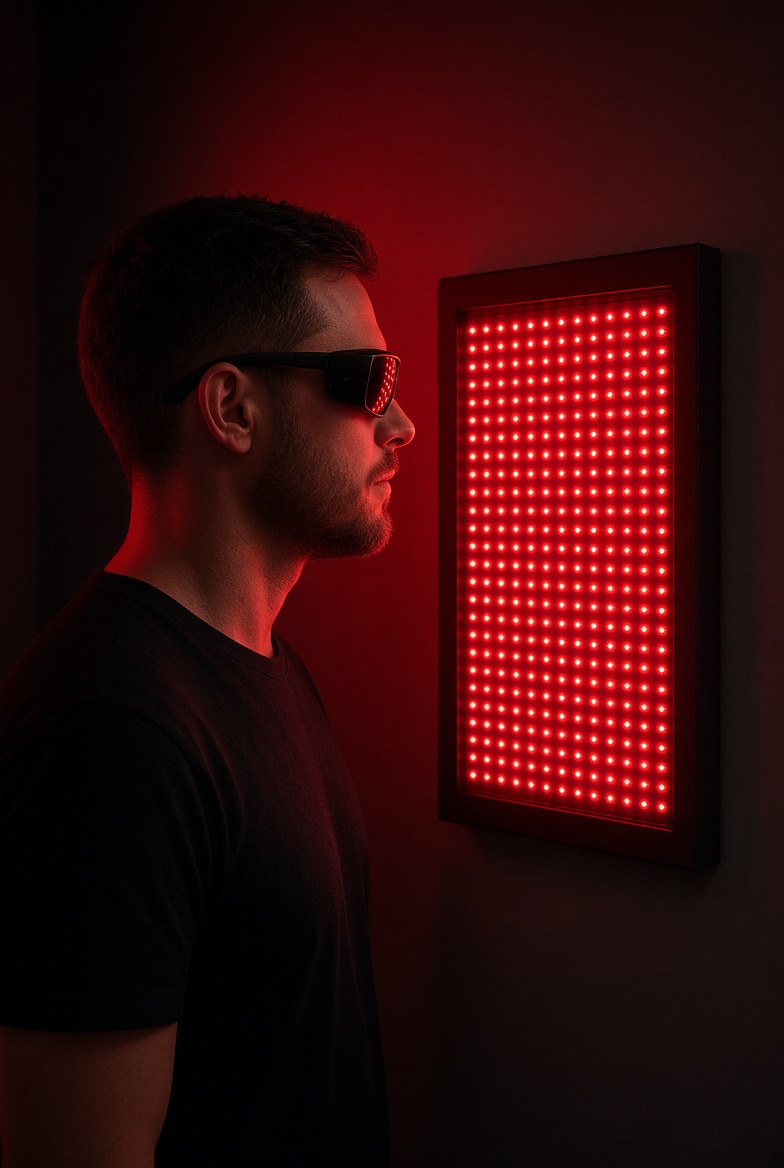
Abstract: Cryptosporidium parvum, a chlorine-resistant protozoan parasite, remains a significant challenge in water treatment and immunocompromised patient care. While ultraviolet (UV) irradiation has demonstrated efficacy against oocyst infectivity, the potential role of photobiomodulation (PBM) and red light therapy in managing cryptosporidiosis requires careful examination. This article reviews current evidence on light-based therapies for Cryptosporidium inactivation and explores the emerging applications of phototherapy in related parasitic infections.
Introduction
Cryptosporidium spp. are protozoan parasites transmitted via the fecal-oral route, representing a major global public health concern. The organism’s resistance to conventional chlorination makes water treatment particularly challenging . Current research has identified ultraviolet (UV) irradiation as an effective method for oocyst inactivation, though the application of red light therapy and photobiomodulation for cryptosporidiosis management remains in early investigation stages.
Mechanisms of Light-Based Cryptosporidium Inactivation
Ultraviolet Irradiation: The Established Evidence
Extensive research has validated UV irradiation’s efficacy against C. parvum oocysts. A 2002 study demonstrated that infectivity decreases exponentially with increasing UV dose, requiring approximately 1.0 mWs/cm² for a 2-log₁₀ reduction (99% inactivation) at 20°C . Notably, while UV-treated oocysts maintained excystation ability, they lost infectivity, suggesting that UV irradiation causes irreversible damage to the parasite’s infectivity mechanisms .
Photoreactivation and Repair Mechanisms
Research indicates that C. parvum oocysts possess DNA repair capabilities. UV-induced pyrimidine dimers undergo repair via both photoreactivation and dark repair pathways, though infectivity recovery was not observed . This distinction between molecular repair and functional recovery is critical for understanding light-based treatment mechanisms.
Wavelength-Specific Effects
Recent studies have evaluated UV-LED efficacy at varying wavelengths. Matsubayashi et al. (2022) demonstrated that longer UV wavelengths (284 and 289 nm) produced higher inactivation activity against C. parvum compared to shorter wavelengths, as assessed by both in vitro excystation assays and in vivo infectivity models .
Table 1: UV-LED Wavelength Efficacy Against Cryptosporidium parvum
| Wavelength (nm) | Time Required for 2 Log₁₀ Inactivation (Excystation Method) | Time Required for 2 Log₁₀ Inactivation (PI/DAPI Staining) |
|---|---|---|
| 268 | 115.5 minutes | 311.3 minutes |
| 275 | 104.1 minutes | 275.2 minutes |
| 284 | 37.4 minutes | 60.6 minutes |
| 289 | 30.7 minutes | 39.1 minutes |
Source: Matsubayashi et al., Parasitology International, 2022
Solar Disinfection: The Thermal and Spectral Synergy
Solar water disinfection (SODIS) has emerged as a practical alternative for Cryptosporidium inactivation, particularly in low-income settings. García-Gil et al. (2020) developed the first comprehensive kinetic model describing both individual thermal and spectral actions and their synergistic effects .
The thermal contribution follows a modified Arrhenius equation, while photoinactivation operates through a series-event mechanistic model. The model, validated across temperatures of 30-45°C and UV irradiance levels of 0-50 W·m⁻², demonstrates remarkable accuracy with only 3.7% error relative to experimental results .
Clinical Applications in Parasitic Infections
Photobiomodulation in Protozoan Infections
While direct research on red light therapy for Cryptosporidium is limited, photobiomodulation (PBM) has shown promise in managing other parasitic infections. A notable case study by Raffaele et al. (2023) reported successful adjuvant use of PBM combined with antimicrobial photodynamic therapy (aPDT) for treating oral manifestations of histoplasmosis and leishmaniasis in an HIV-positive patient, achieving complete wound healing within four days .
Mechanistic Considerations
Photobiomodulation therapy (PBMT) involves applying light at specific wavelengths to promote cellular regeneration and immune modulation. Studies investigating Trypanosoma cruzi infection have revealed that PBM can influence:
- Membrane repair mechanisms
- Calcium influx and lysosomal recruitment
- Lipid metabolism and immune response modulation
These mechanisms suggest potential applications in managing intracellular parasitic infections, though direct evidence for Cryptosporidium remains lacking.
Clinical Implications and Limitations
Current Gaps in Evidence
- Direct Clinical Studies: No published studies specifically evaluate red light therapy or PBM for Cryptosporidium infection in human patients.
- Species-Specific Effects: Extrapolation from other protozoan parasites (e.g., Leishmania, Trypanosoma) requires caution due to significant biological differences.
- Dose Optimization: Optimal wavelength, fluence, and treatment protocols remain undefined for Cryptosporidium applications.
Potential Applications
Despite current limitations, several theoretical applications warrant investigation:
- Immunocompromised Patients: Adjunctive PBM could support immune function and mucosal healing
- Gastrointestinal Photobiomodulation: Abdominal PBM has demonstrated potential in reducing gastrointestinal inflammation and microbial rebalancing
- Post-Exposure Prophylaxis: Early intervention following waterborne exposure might mitigate infection severity
Table 2: Comparison of Light-Based Therapies for Parasitic Infections
| Parameter | UV Irradiation | Solar Disinfection | Photobiomodulation |
|---|---|---|---|
| Primary Application | Water treatment | Water disinfection | Clinical therapy |
| Target Stage | Oocysts | Oocysts | Host response |
| Mechanism | Direct DNA damage | Thermal + spectral synergy | Cellular modulation |
| Evidence Level | Strong | Moderate | Emerging |
Expert Recommendations
Based on current evidence, the following recommendations are offered:
- Water Treatment: UV-LED systems (particularly 284-289 nm wavelengths) represent effective technologies for Cryptosporidium inactivation in water supplies .
- Clinical Management: Red light therapy should not replace standard anti-parasitic therapy but may have adjunctive potential that requires further study.
- Research Priorities: Priority should be given to:
- In vitro studies evaluating PBM effects on Cryptosporidium sporozoites
- Animal models assessing PBM as adjuvant therapy
- Clinical trials in immunocompromised populations
Conclusion
The evidence supporting red light therapy specifically for Cryptosporidium remains preliminary and largely inferential. While UV irradiation and solar disinfection have demonstrated efficacy against oocysts, the therapeutic application of photobiomodulation requires substantial additional investigation. Clinicians should rely on established protocols while acknowledging the potential for adjunctive phototherapies as emerging research directions.
Disclaimer: This article is for informational purposes and does not constitute medical advice. Patients with suspected cryptosporidiosis should consult infectious disease specialists and follow established treatment protocols.