 Free Shipping
 Buy Now, Pay Later
 Eligible

Red Light Therapy for Hemochromatosis: A Clinician’s Guide to the Evidence, the Mechanisms, and the Missing Link
Bottom line: Red light therapy (photobiomodulation, or PBM) is not a treatment for iron overload and should never replace therapeutic phlebotomy or chelation. However, a growing body of mechanistic and clinical evidence suggests that PBM may address a secondary consequence of hemochromatosis that standard therapy does not touch: mitochondrial dysfunction and impaired tissue repair driven by chronic iron-mediated oxidative stress. For patients stabilized on phlebotomy who struggle with fatigue, slow-healing wounds, or joint pain, PBM represents a low-risk adjunct worth discussing with a hematologist or hepatologist. The direct evidence in hemochromatosis specifically, however, remains thin.
Why Hemochromatosis Demands More Than Iron Removal
Hemochromatosis is a disorder of iron metabolism in which hepcidin dysfunction leads to excessive intestinal iron absorption and deposition in the liver, heart, pancreas, and joints . Standard care—therapeutic phlebotomy—effectively lowers systemic iron burden and prevents end-organ damage when initiated early . Chelation is reserved for patients who cannot undergo phlebotomy .
What phlebotomy does not do is reverse established tissue injury or address the downstream metabolic consequences of years of iron-driven oxidative stress. Iron catalyzes Fenton chemistry, generating hydroxyl radicals that damage mitochondrial membranes, denature proteins, and perpetuate a cycle of cellular dysfunction. Patients frequently report persistent fatigue, arthralgia, and impaired wound healing even after ferritin normalization. This is where PBM enters the conversation—not as an iron-lowering intervention, but as a mitochondrial rehabilitation strategy.
What Red Light Therapy Actually Does at the Cellular Level
Photobiomodulation uses red (600–700 nm) and near-infrared (800–1100 nm) light to stimulate mitochondrial function. The accepted primary mechanism is photon absorption by cytochrome c oxidase (Complex IV) in the mitochondrial respiratory chain . This absorption triggers increased electron transport, oxygen consumption, and ATP production.
The evidence for this mechanism is robust and long-standing. Wong-Riley and colleagues demonstrated that 670 nm and 830 nm LED treatment restored cytochrome c oxidase activity blocked by potassium cyanide in primary neurons, and that the most effective wavelengths paralleled the near-infrared absorption spectrum of oxidized cytochrome c oxidase . Hamblin’s review of PBM preconditioning confirms that this enzyme activation initiates a signaling cascade involving transcription factors and gene expression changes that promote cytoprotection and repair .
Table 1: Mechanistic rationale for PBM in iron-overload states. Note: These mechanisms are inferred from general PBM literature, not from hemochromatosis-specific trials.
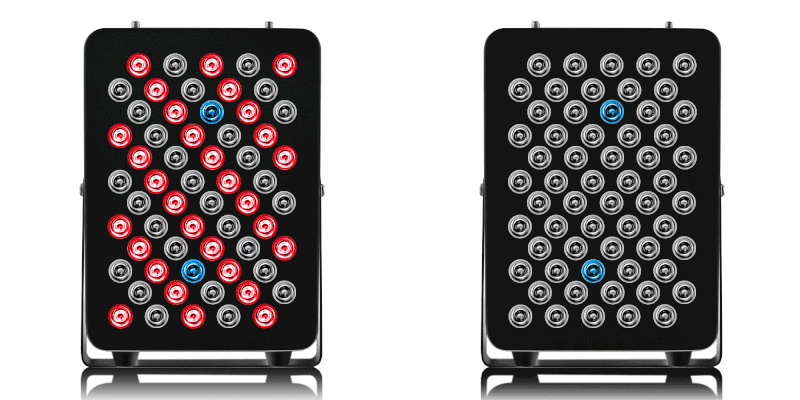
VELLGUS Elite V2
THE #1 RATED RED LIGHT DEVICE
Vellgus Red Light Elite V2 is an incredible way to experience the benefits of multiwave technology spectrum: 480nm 630nm, 660nm, 810nm, 830nm, 850nm. No other red/NIR light device available provides the multi-wave R+| NIR+ spectral output.
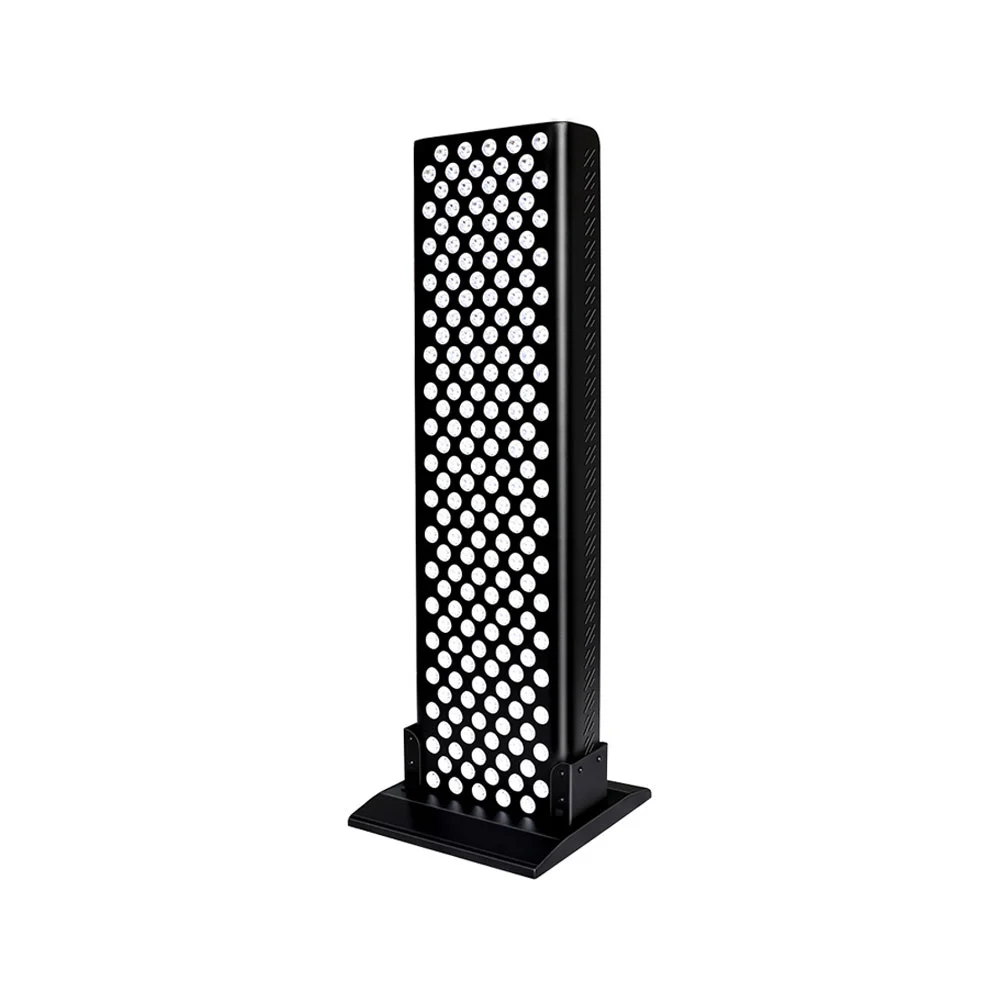
VELLGUS max 300
THE #1 RATED FULL BODY RED LIGHT DEVICE
Upgrade your red light therapy experience and take it to the next level with VELLGUS Red Light Max 300. This device is specifically designed for those wanting a brighter and more intense red light treatment
The Critical Gap: No Direct Clinical Trials in Hemochromatosis
A rigorous search of PubMed reveals no published randomized controlled trials of PBM specifically in hemochromatosis patients. This absence must be stated plainly. Any claim that red light therapy “treats hemochromatosis” is unsupported and clinically irresponsible.
What does exist is indirect evidence from related conditions:
Wound healing in iron-deficient states. A 2013 animal study examined laser (660 nm) and LED (700 nm) therapy on cutaneous wounds in iron-deficient rats. LED irradiation significantly increased fibroblast proliferation in anemic animals, while laser was more effective in non-anemic controls . This suggests PBM may partially compensate for impaired healing capacity when iron status is abnormal—though the model was iron deficiency, not overload.
Pressure ulcer healing in frail elderly. A 2026 quasi-experimental study found that PBM (635 nm and 904 nm) reduced median healing time for category II pressure ulcers from 153 days to 33 days, and for category III ulcers from 195 to 70 days, with zero recurrence at 24 months for category II ulcers . While not conducted in hemochromatosis, this population shares the特征 of impaired tissue repair and comorbidity burden.
Sickle cell leg ulcers. A pilot study combining photodynamic therapy and PBM in sickle cell disease—another condition with iron dysregulation and chronic wound burden—reported 64.7% significant healing and a 75.4% reduction in bacterial load . The authors noted elevated IL-6 and PSGL-1 as prognostic biomarkers for non-healing.
Table 2: Indirect clinical evidence supporting PBM in conditions with impaired iron homeostasis or tissue repair.
Clinical Considerations for the Hemochromatosis Patient
Who May Benefit
The hemochromatosis patient most likely to benefit from PBM is one who is already stabilized on phlebotomy (ferritin and transferrin saturation controlled) but who has residual symptoms: persistent fatigue despite normal iron stores, chronic musculoskeletal pain, or a wound that is healing more slowly than expected. PBM is not appropriate as primary therapy, and any patient considering it should have a conversation with their managing physician first.
Safety Profile
PBM is generally well tolerated. A 2025 safety study of 810 nm PBM in developing rat brains found no evidence of glial reactivity or pro-inflammatory cytokine expression . A 2024 study of repeated low-level red-light therapy in children with myopia found no retinal safety signals over 12 months . The most common adverse events are mild and transient: local warmth, tingling, or erythema.
A hemochromatosis-specific caution: Patients with significant liver fibrosis or cirrhosis may have altered light penetration and tissue optical properties. While no evidence suggests harm, dosing should be conservative and supervised. Additionally, any device applied over tattooed skin may produce unexpected thermal sensations due to ink-light interactions .
What PBM Does Not Do
PBM does not:
- Reduce serum ferritin
- Remove iron from organs
- Replace phlebotomy or chelation
- Reverse cirrhosis
- Eliminate the need for regular iron monitoring
Any marketing claim suggesting otherwise should be treated as a red flag.
A Note on “Detox” Claims and Iron Chemistry
Some commercial red light therapy marketing invokes “detoxification” or “heavy metal removal” language. There is no plausible photochemical mechanism by which red or near-infrared light at therapeutic doses mobilizes stored iron from ferritin or hemosiderin. The photon energies used in PBM (1.2–2.1 eV) are far below what would be required to break iron-protein coordination bonds. PBM’s value lies in mitochondrial support and tissue repair signaling, not iron chelation. Clinicians and patients should evaluate products and protocols on that basis.
Frequently Asked Questions
1. Can red light therapy lower my ferritin levels?
No. There is no evidence that PBM affects iron absorption, storage, or excretion. Ferritin reduction requires therapeutic phlebotomy or chelation under medical supervision . PBM should not be used as a substitute for these interventions.
2. Is red light therapy safe for someone with hemochromatosis?
Available safety data from other populations suggest PBM is well tolerated, with mild transient effects like warmth or tingling . However, no dedicated safety trials exist in hemochromatosis. Patients with cirrhosis or significant organ damage should use PBM only after clearing it with their hepatologist.
3. Will red light therapy help with the fatigue I still have after phlebotomy?
This is the most plausible potential benefit, but it remains unproven in hemochromatosis specifically. The mechanistic rationale—improving mitochondrial ATP production via cytochrome c oxidase activation —is sound, and fatigue is a common residual symptom in iron-overload disorders. A therapeutic trial of 4–6 weeks with subjective energy tracking is reasonable, provided iron levels remain monitored.
4. What wavelength and dose should I look for?
The PBM literature most consistently supports 660 nm (red) and 810–850 nm (near-infrared) for tissue repair and mitochondrial effects. Effective doses in clinical studies range from 10–20 J/cm² per session, delivered 2–3 times weekly . Devices should have verified irradiance specifications; unregulated consumer devices vary widely in output.
5. Should I stop phlebotomy if I start red light therapy?
Absolutely not. Phlebotomy is the standard of care for hemochromatosis and the only intervention proven to prevent organ damage and improve survival . Discontinuing it in favor of any complementary therapy would be dangerous. PBM, if used, is adjunctive only.
Final Clinical Position: Red light therapy is a mechanistically rational, low-risk adjunct for addressing the mitochondrial and reparative consequences of chronic iron overload—but it is not a treatment for iron overload itself. The absence of direct hemochromatosis trials is a meaningful evidence gap. Patients interested in PBM should be counseled to maintain standard care, set realistic expectations (symptom support, not iron reduction), and report any changes in symptoms or iron markers to their care team.